Timber Garage Costs In The UK: What You Pay In 2026

A practical guide to timber garage prices, what different garage sizes can cost and the main factors that influence the final quote.
Timber Garage Costs In The UK: What You Pay In 2026

How much does a timber garage cost in the UK?

In 2026, a complete timber garage project in the UK can cost between £8,000 and £15,000 for a single garage or £16,000 and £25,000 for a double garage. Larger, oak-framed or more complex projects can cost £25,000 to £40,000 or more.

These are broad estimates rather than fixed prices. The final cost will depend on the garage size, materials, roof, doors, finishes and site conditions, as well as whether the quote includes foundations, delivery and installation.

This guide explains what you are paying for and how to compare quotes fairly.

Why Online Average Prices Do Not Tell The Full Story

Average prices provide a useful starting point, but they cannot tell you exactly what your garage will cost. Two similar-looking quotes may include very different materials, services and levels of finish.

One price may cover only the timber structure, while another may include the roof, foundations, delivery and installation. VAT, planning drawings and optional features may also be charged separately.

The final cost will also depend on the garage’s size, design and intended use. A simple storage garage will have different requirements from a building that includes a workshop, gym or hobby room.

Site access, groundwork, roof shape, doors and finishes can all change the total. Always check what is included before comparing prices.

Chart Garages Pricing Examples

To give a sense of scale, here are a few current starting prices (excluding VAT) for Chart Garages:

  • Single garage - from £3,840 + VAT
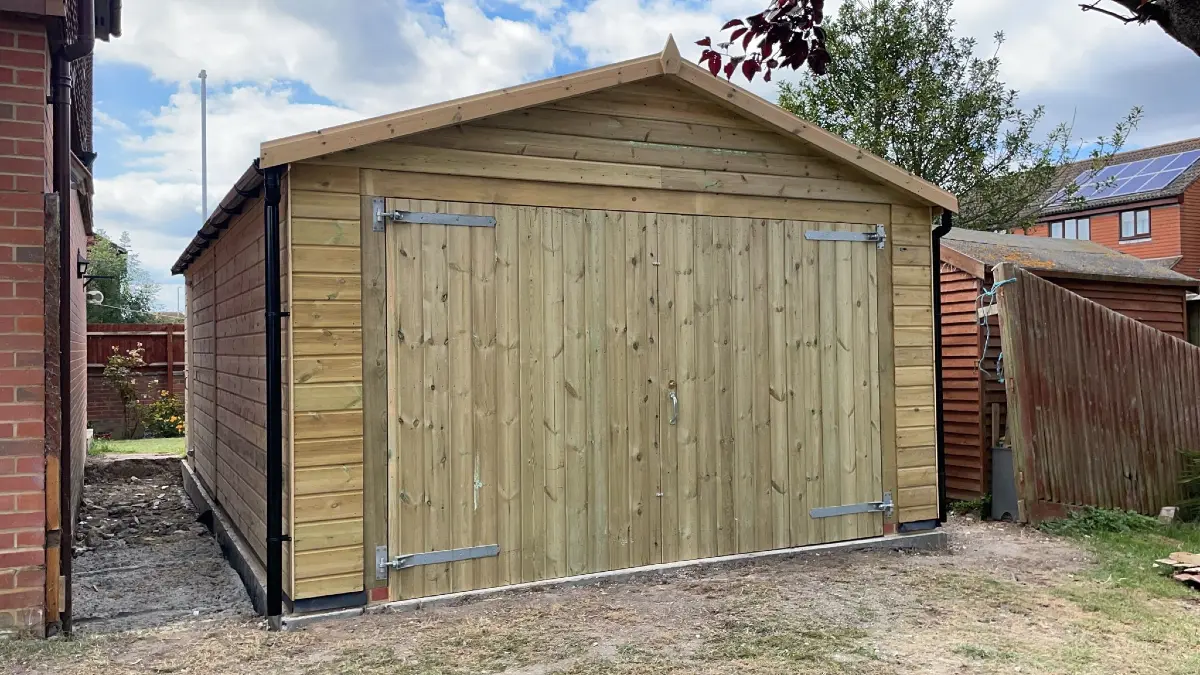
    A single wooden garage built from sustainably sourced timber, offering reliable, great-value garaging for one car.
  • Double garage - from £6,280 + VAT
    Space for two cars or one car with workshop room; a practical, attractive addition to any driveway.
  • Triple garage - from £9,720 + VAT
    A flexible three-bay wooden garage providing generous garaging or combined car and workshop space.

These figures represent entry-level models, covering the timber structure itself. Groundworks, delivery, and installation are quoted separately. For example, the total cost of a single timber garage is usually around £6,500–£10,000, depending on site conditions and finish. 

Every Chart building is made to order, so the final wooden garage cost depends on your chosen size and roof style. Optional features such as hipped roofs, oak posts, extra doors, or custom joinery will affect the overall cost. Still, even fully specified Chart designs are competitively priced against other quality UK builds.
Why Our Prices Stay Fair

At Chart Garages, we design, manufacture, and assemble every building in-house, using efficient workshop production and trusted UK timber suppliers. 

Because we manage the whole process - from design and joinery through to delivery - there are no third-party markups or dealer commissions. This direct approach keeps costs low while maintaining the high standards we are known for. 

Every Chart garage is built with pressure-treated timber and traditional joinery, chosen for strength, durability and long-term value.
What Factors Affect The Cost of a Timber Garage?

No two wooden garages are quite the same, and several factors influence the final price. 

Understanding these helps you compare quotes fairly and plan your project with confidence.

  1. Size and layout - This is the biggest driver of cost. A single-bay garage naturally requires fewer materials and less labour than a double- or triple-bay garage. Adding a workshop, storage area, or canopy extension increases both size and complexity.
  2. Design and roof shape - Roof size, pitch and complexity can affect the price. A standard gable roof is usually simpler to build, while a hipped roof requires more materials and labour. The roof covering will also affect the cost and appearance.
  3. Timber type and grade - Pressure-treated softwood is the most popular option for strength and value.
  4. Roofing and external finishes - Materials such as felt, clay tiles, or slate vary widely in price and durability. Cladding choices, such as shiplap boarding and weatherboard, also influence aesthetics and maintenance requirements.
  5. Foundations and site conditions - Level, accessible sites are straightforward, while sloping or clay ground may need additional groundwork or reinforced concrete bases, which can add to the final cost. For more information about preparing a stable base, read our step-by-step guide to wooden garage foundations.
  6. Joinery and detailing - Extra doors, windows, or bespoke joinery add light, ventilation, and individuality but raise material and labour costs.
  7. Planning and location - Homes in conservation areas, National Landscapes (formerly known as AONBs), National Parks, or near listed buildings often need specific roof heights, materials, or layouts to meet planning conditions. These requirements can add design and application costs. For an overview of the main rules, read our guide to planning permission for garages, carports and carriage houses.

Discussing these details early with your builder helps your quotation reflects your exact specifications and avoids unexpected extras later on.

Why Quality Matters More Than Price

Cost alone does not define quality. What matters most is how the timber garage is designed and built.

When reviewing specifications or quotes, look for:

  • Craftsmanship and structural integrity - Pressure-treated timber, good ventilation, and thoughtful detailing prevent movement and decay. Read our guide to choosing a low-maintenance timber garage to learn which materials and design details can reduce long-term upkeep.
  • Standards compliance - Check whether Building Regulations approval applies to your project. Even when approval is not required, the garage should be designed and built to handle the expected structural loads safely.
  • Durability - Pressure-treated timber, good ventilation, and thoughtful detailing prevent movement and decay, reducing maintenance over time.
  • Design - A well-proportioned wooden garage enhances your property’s character and can increase its value.
  • Service and aftercare - Working directly with an experienced manufacturer gives you long-term reassurance and access to ongoing advice if your needs change.

How to Avoid Costly Surprises

Every site and specification is different, so the most reliable way to get a realistic idea of cost is to request a quote.

Discussing your project’s details with the builder early helps ensure your quote reflects everything - from access and foundations to roof design, finishes, and installation.  That way, there are no surprises later on.

At Chart Garages, our team can guide you through the options and help you find the right balance between budget, function, and appearance. 

If you need to apply for planning permission, our experienced team can help with elevation drawings, advice, and the information your local authority will request. 

You can start by designing your wooden garage to request a bespoke quote, downloading our brochure, or getting in touch to discuss your ideas.

Frequently Asked Questions

What is the most affordable timber garage design?
A standard single-bay garage with a simple roof, standard doors and few optional features will usually cost less than a larger or bespoke design.

Do timber garage prices include VAT?
Not always. Chart Garages starting prices are shown excluding VAT, so include this when planning your budget.

Are foundations included in the garage price?
This depends on the quote. The timber structure and groundwork are often priced separately.

Do extra doors and windows increase the price?
Yes. Additional doors, windows and custom joinery require more materials and labour, which will increase the final quote.

Can difficult site access increase the cost?
Yes. Narrow entrances, sloping ground and limited access for vehicles or equipment can make delivery, groundwork and installation more complicated.

Should I budget for planning costs?
Possibly. If planning permission is required, you may need to pay an application fee and could also need drawings or professional advice.
Written by Megan Cooper
Megan is the head of the Chart Garages brand and knows timber garages like the back of her hand. With over a decade of experience, she is a go-to resource for designing and constructing wooden garages. She has managed projects ranging from tiny bijou workshops in the smallest of spaces to large classic-car barns for TV personalities.
Published January 5, 2026 | Updated August 4, 2026
More Guides, Advice & Inspiration
How To Make a Detached Garage Look Like Part of Your Property

How To Make a Detached Garage Look Like Part of Your Property

Find out how to design and position a detached garage so it feels like a natural part of your property.
Carport Design: Designing a Carport That Suits Your Home

Carport Design: Designing a Carport That Suits Your Home

A practical guide to choosing a carport design that suits your home, vehicles and available space.
6 Costly Timber Workshop Mistakes (And How to Avoid Them)

6 Costly Timber Workshop Mistakes (And How to Avoid Them)

Discover six common timber workshop mistakes and learn how careful planning can help you avoid costly changes after installation.
Discover our range of Garages & outbuildings
Trusted by generations of homeowners, our garages, carriage houses, carports and workshops are the time-tested and proven choice for high quality long-lasting buildings.
Garage buildings
Chart GaragesOak Framed GarageCarriage House and StoreChart Woden Garage FrontGarden Workshop StudioExtra High Wooden Garage