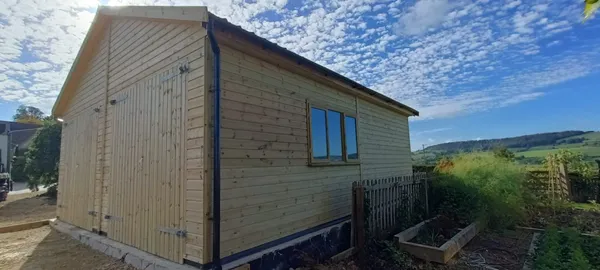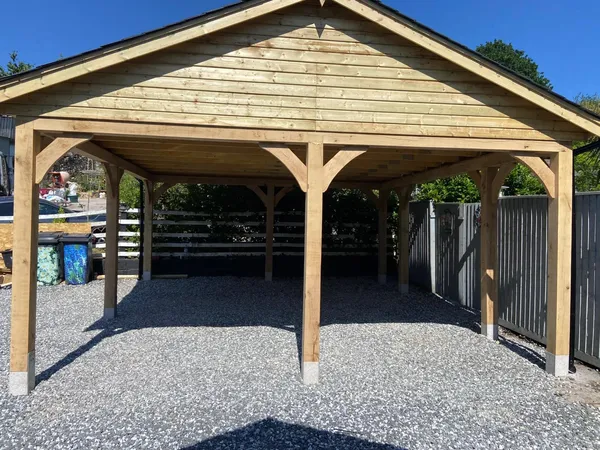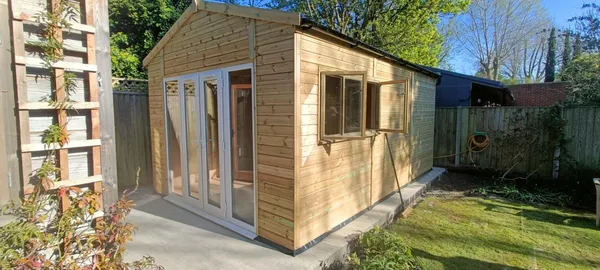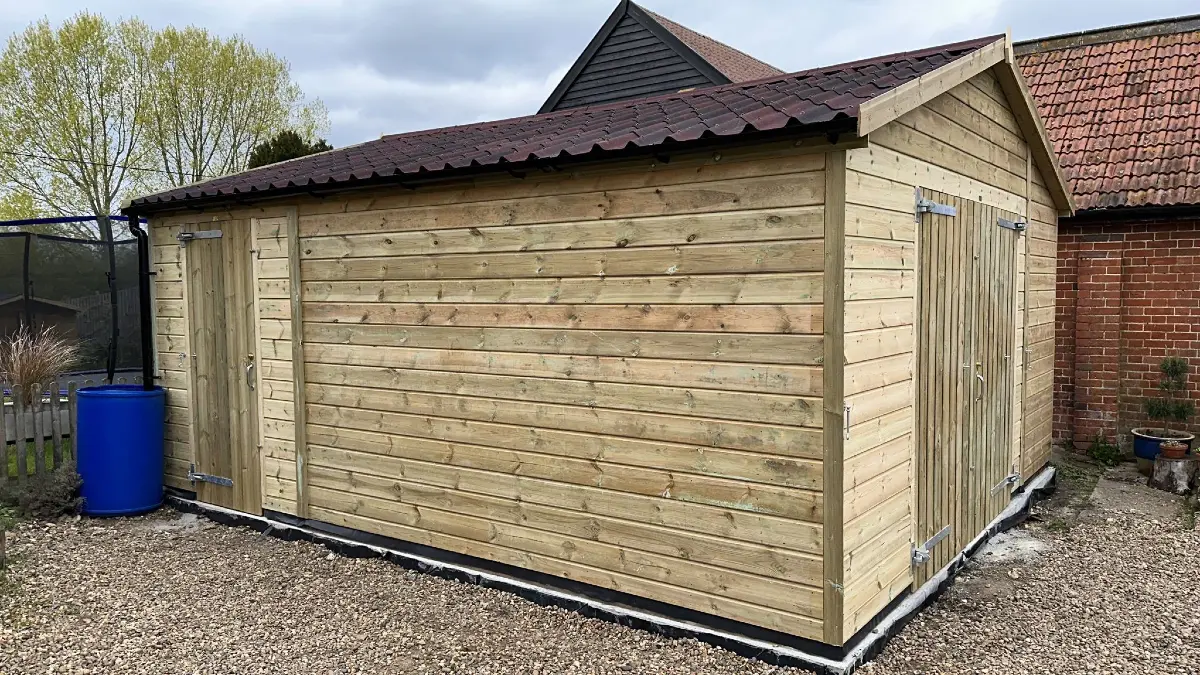
A low-maintenance timber garage keeps rain out and lets moisture escape while allowing the wood to expand and contract naturally.
From more than 30 years of building timber garages, we know that the materials, design and installation all affect how much maintenance the building will need later.
You will still need to look after the garage from time to time, of course. How often depends on its location, exposure to the weather and how you use it. However, a well-designed garage is much easier to maintain.
Below, we explain which features have the greatest effect on the garage’s maintenance and lifespan.
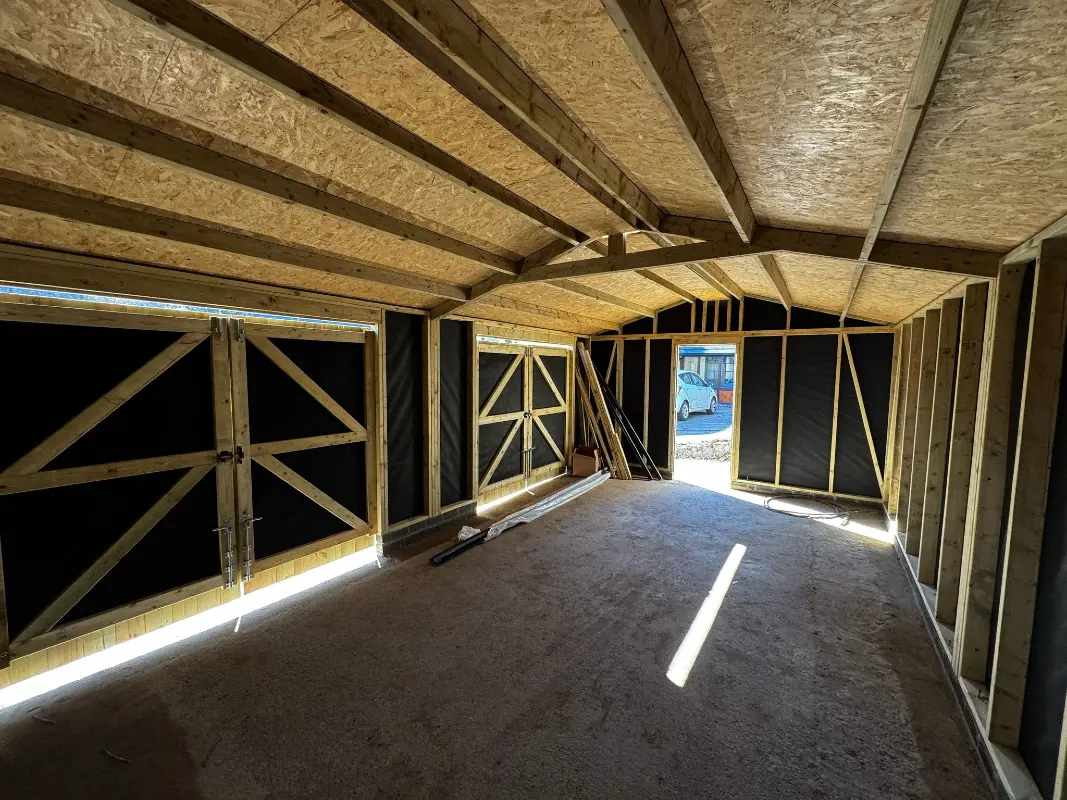
The quality of the frame affects the whole building. Thicker timber framing gives the building more strength and helps it stay stable over time.
A strong frame also supports the cladding and roof, reducing the chance of movement and gaps.
Pressure treatment protects the timber from fungal decay and insect damage. This helps the frame last longer than untreated wood.
Strong joints and proper bracing help the structure stay square as the timber settles, reducing the risk of racking or movement.
When the frame is braced correctly, the building holds its shape over time, so the doors and windows continue to work properly and the cladding stays in place.
Cladding needs to cope with rain and the timber expanding and contracting. Check the board thickness, timber quality, profile and fixings.
Shiplap cladding has overlapping boards that help rainwater run off the walls.
Corrosion-resistant fixings keep the boards in place and prevent rust marks as the timber moves.
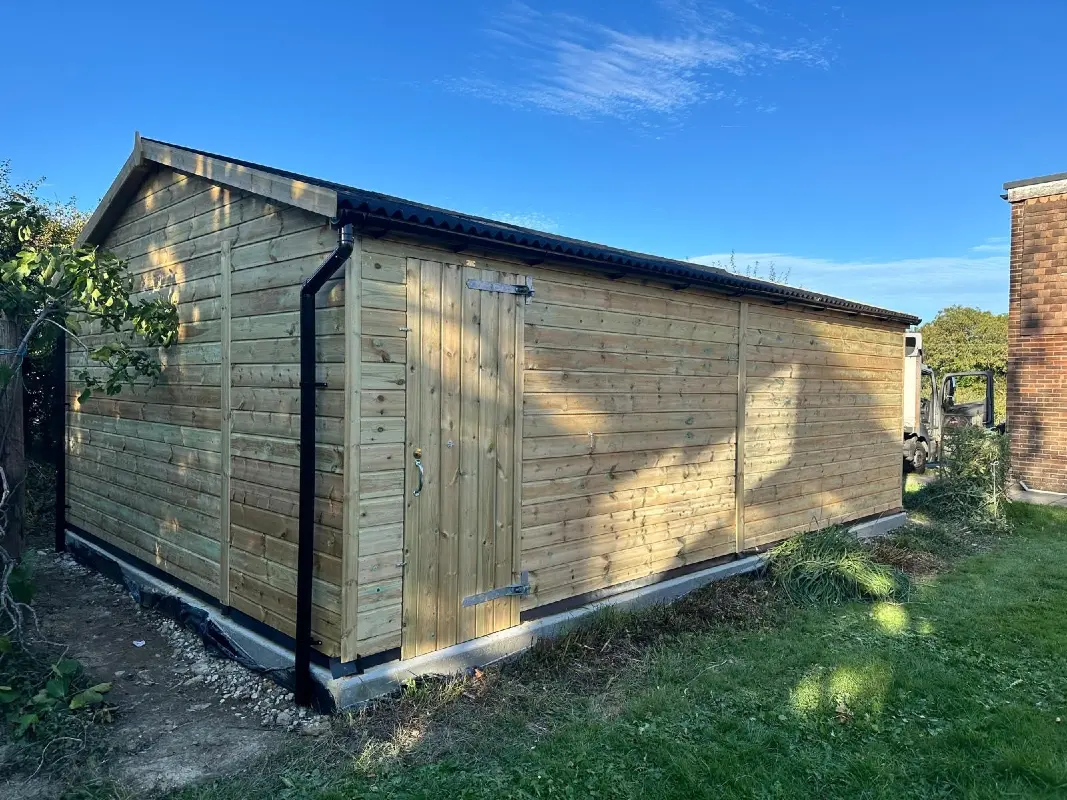
The roof does most of the work protecting a timber garage, so the pitch needs to be steep enough to shed water quickly. For most sheeted roofs, a 10 or 15-degree pitch provides good drainage because the long, continuous sheets shed water effectively. Tiled roofs usually need a steeper pitch so rainwater can run off properly.
Choose a durable roof covering to reduce repairs and delay replacement. Wide roof overhangs also keep rain away from the walls and reduce water splashing onto the base.
Good ventilation helps control moisture inside the garage. Without enough airflow, warm air can condense on cooler surfaces, increasing the risk of damp, mould and timber decay.
The amount and type of ventilation needed will depend on the garage’s size, construction and use. Suitable vents or other openings can help air circulate and moisture escape.
Keeping water away from the base helps protect the timber and reduce maintenance. The base should be level, stable and strong enough for the garage and anything stored inside.
Keep the timber above the surrounding ground and make sure rainwater drains away from the building. Avoiding putting the garage in a low area where water collects.
Ask your garage supplier about the base and drainage requirements before you start work.
For more information about preparing the site, read our guide to timber garage foundations.
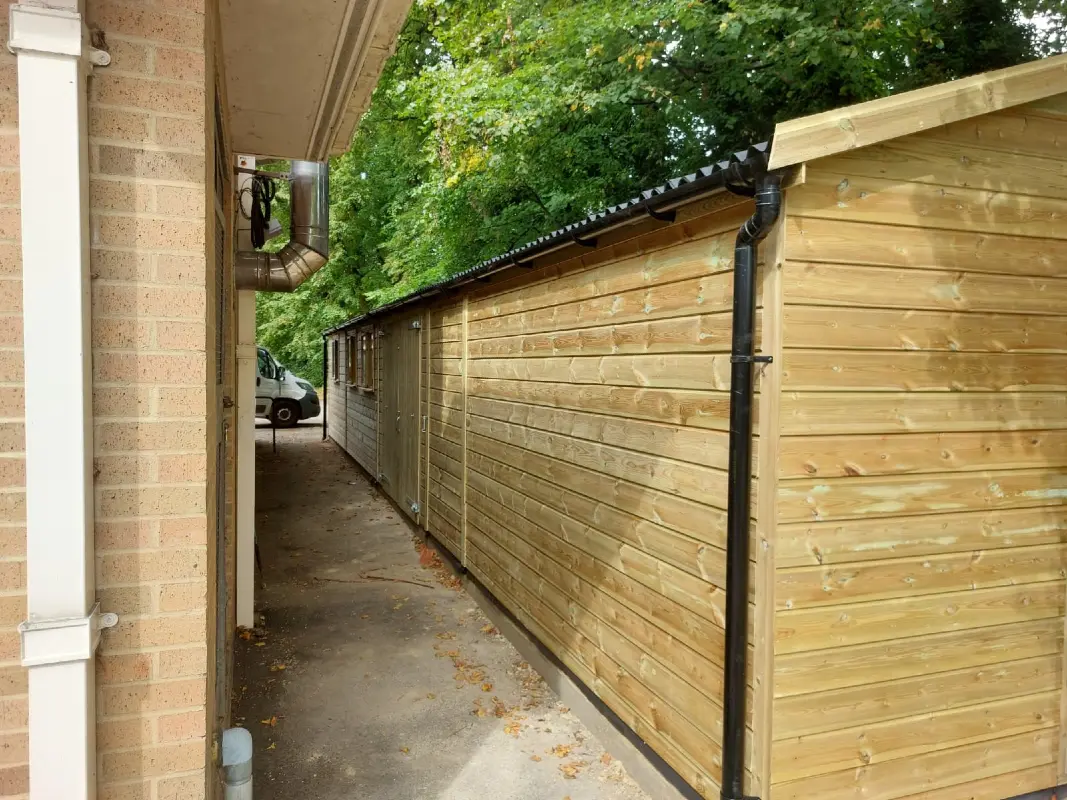
Guttering helps control how rainwater moves around the building. A well-positioned system collects water from the roof and directs it away from the walls and base.
Direct downpipes to a suitable drainage point away from the garage, such as a soakaway or well-drained gravel area. Follow the slope of the ground so water does not collect around the base.
Some specifications can improve a timber garage’s strength, weather protection and ease of maintenance.
As a general guide, features worth including are:
These are just a starting point.
A stronger specification may increase the initial price. Our guide to timber garage costs in the UK explains what affects the final quote.
At Chart Garages, we offer three timber-garage ranges - Clipper, Chart, and Chester - each with increasing specification levels to suit different budgets and requirements.
The Clipper is our value option featuring pressure-treated 75mm × 50mm framing and 16mm shiplap cladding. The Chart range steps up with 100mm × 50mm framing, larger doors, guttering, and refined detailing. The Chester range offers premium features such as extra-thick 19mm cladding, a steeper roof pitch, soffits and fascias, and lightweight tile finishes for a more upscale look.
Interested in one of our ranges? Design your wooden garage to request a bespoke quote, download our brochure, or get in touch to discuss your ideas.
Is a wooden garage high-maintenance?
Not necessarily. A well-designed timber garage made from suitable materials can be straightforward to maintain. Its upkeep will also depend on its location, exposure, finish and use.
Do timber garages need much maintenance?
Not if they feature thick pressure-treated framing and cladding, adequate ventilation, generous roof overhangs, and a well-draining base.
A well-designed wooden garage may only need regular checks, occasional clearing of the roof and gutters, and exterior treatment when required. The maintenance schedule will depend on the timber, finish, location and manufacturer’s guidance.
How long do timber garages last?
With quality materials, good detailing, and proper installation, a timber garage can last for several decades. Longevity depends mainly on how well the structure manages moisture and movement over time.
What affects timber maintenance?
Moisture exposure, cladding thickness, roof design, fixings quality, ventilation, and timber type and treatment play a role. When these elements are specified well, the building stays stable and requires far less ongoing attention.
What should i ask a manufacturer before buying?
Helpful questions include: