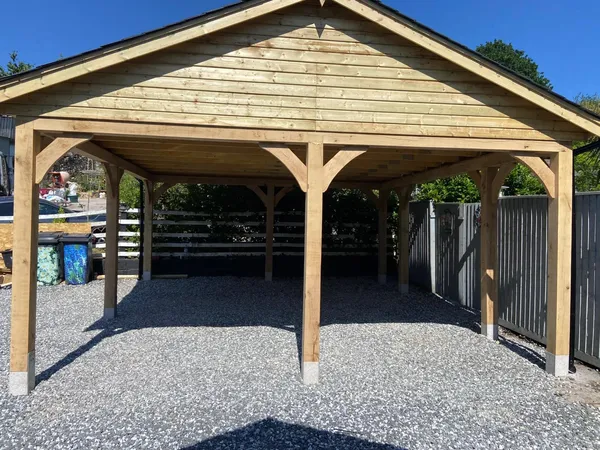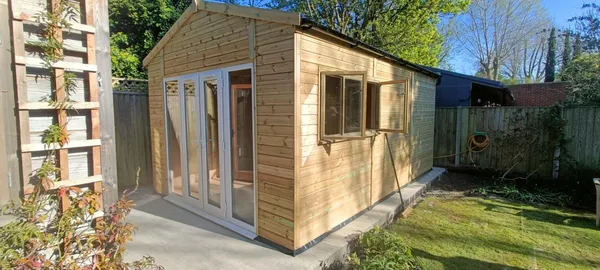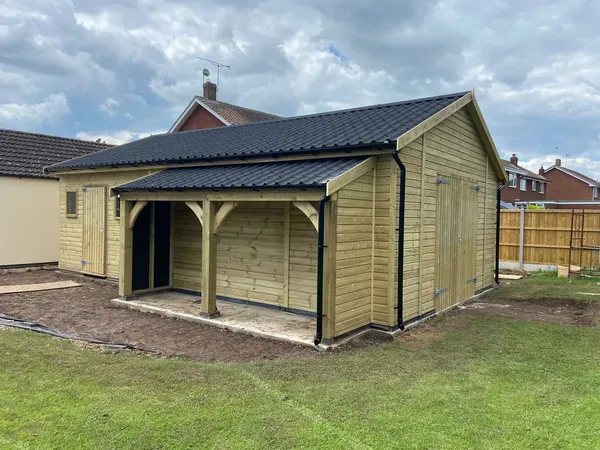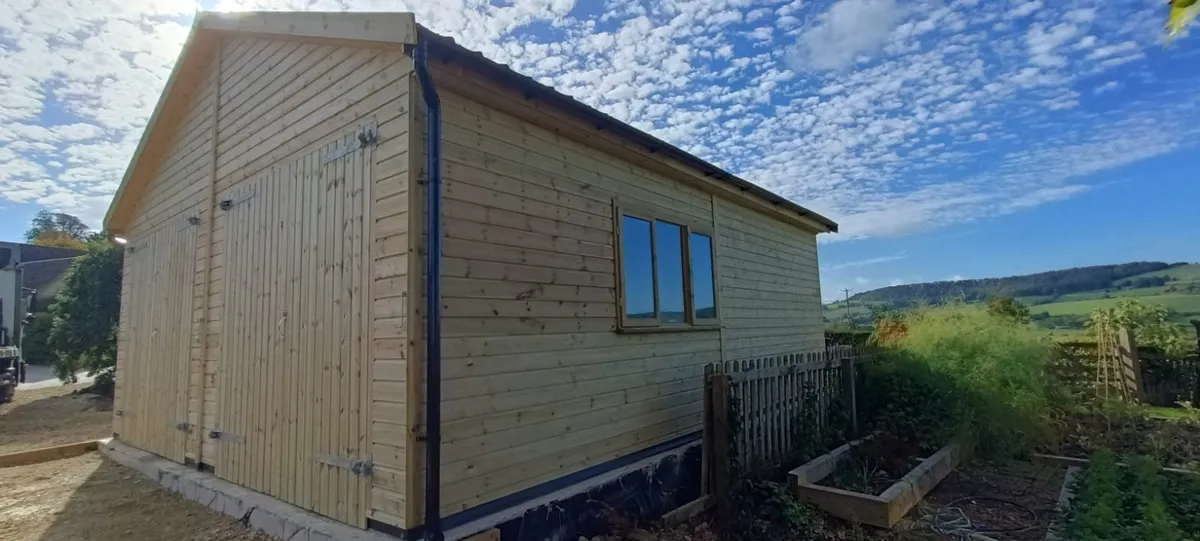
A detached garage can match your house by using similar proportions, roof shapes, materials, colours and details. Its position also matters, as the garage should feel connected to the property without overwhelming it.
Below, we explain how each of these choices can help your detached garage feel like a natural part of the property.
In most cases, the issue comes from designing the garage without properly linking it to the house.
This often leads to an awkward position, poor alignment and proportions that do not feel right. Garages can end up at odd angles, feel oversized, or look disconnected from the main building.
Design decisions can make this worse. If the roof, doors, windows, and details do not tie in with the house, the two structures can look mismatched.
Positioning is one of the most important decisions, and it needs to be made early.
In many situations, the available space is not the limiting factor. Access, turning space, and how the garage links to the driveway usually determine where it should go. Make sure there is enough room to enter, turn, and reverse comfortably without tight angles or repeated manoeuvres.
These factors are important, but so is how the garage sits within the plot. Garages set at odd angles or pushed into corners of the plot can feel disconnected, even if the design is otherwise well thought out. Where possible, keep the garage parallel to the house, or align it with a clear boundary or driveway line.
Avoid placing the garage where it blocks key views of the house or disrupts the overall layout of the plot. It may make it harder to move between different parts of the property.
For more information, read our guide to choosing the best garage placement on your property.
Garages that are oversized or too tall can quickly become the most prominent structure on a plot. A detached garage should be large enough to use comfortably, but not so dominant that it competes with the house.
Allow enough space for vehicles, doors, and day-to-day use, while keeping wall heights slightly lower than the main house, where possible.
Install well-proportioned doors and windows to help the garage sit more naturally within your property.
Our guide to standard garage sizes in the UK can help you estimate how much room you need.
The way a detached garage sits on the site has a big effect on how well it fits with the property. Even a well-designed building can look out of place if you do not plan the ground levels properly.
Position the garage at the right height for the house and surrounding ground. If it sits too high, too low or on an awkward slope, it can feel disconnected from the rest of the property.
You also need to consider drainage. Low areas can allow water to collect around the garage and cause problems over time.
Ask an experienced groundwork contractor to check the levels, ground conditions and drainage before preparing the base.
Read our guide to wooden garage foundations to understand the main preparation involved.
The materials you choose will affect how well the garage fits with the rest of the property.
Matching new brickwork to an existing house can be difficult. Even small differences in the brick type, colour or age may stand out. However, a carefully chosen contrast can also work well.
Timber offers more flexibility. Its natural appearance can suit both traditional and contemporary homes. You can also choose from different cladding profiles and finishes, making it easier to complement the house without copying it exactly.
External timber tends to change colour as it ages. The final appearance will depend on the timber, its treatment, the finish and its exposure to the weather.
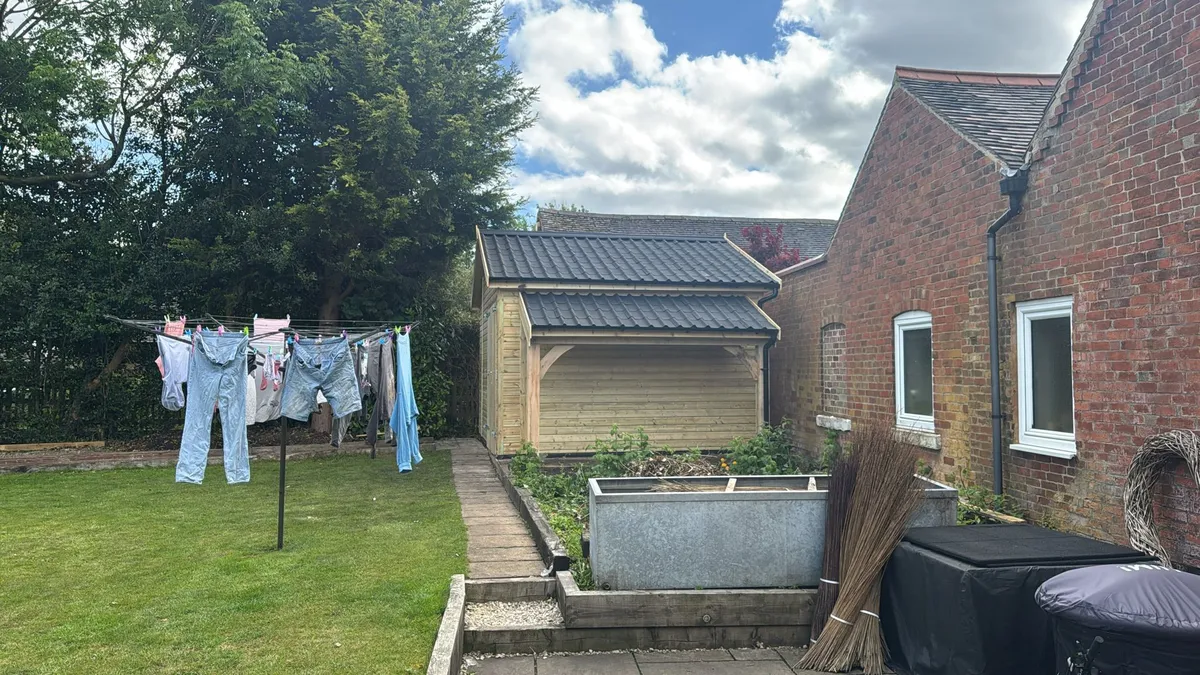
A detached garage does not need to match the house exactly, but the two buildings should look connected.
The roof is a good place to start. A similar pitch or roof direction can create a visual link, even if the garage design is simpler. A very different roof shape or angle will make the garage stand out more.
Keep the details consistent, too. Use similar shapes, sizes or finishes for the eaves, overhangs and trims to bring the two buildings together.
Even when the garage itself is well designed, poor or inconsistent landscaping can make it feel out of place.
Use the same or similar materials for driveways and paths to help the garage feel more connected to the house.
Add low planting or hedging to help the garage blend into the garden. But keep plants away from timber walls, vents and drains. Dense planting can trap moisture and make the garage harder to maintain.
At Chart Garages, our timber garages are made to order, so you can tailor the layout, proportions, and detailing to suit both your property and how you will use the space day to day.
Built from high-quality, pressure-treated timber and precision-manufactured in our workshop in Ashford, our garages are built for long-term durability and reliable performance.
Choose from a range of cladding styles, roofing options, and design features, including side doors, additional windows, and multiple bays.
Should my garage be the same colour as my house?
Not necessarily. You can use a matching colour or choose one that complements the house, roof and surrounding garden.
What colour should I paint a detached garage?
Choose a colour that works with the house, roof and surrounding garden. It can match the house or use a softer, complementary shade.
Should a detached garage be smaller than the house?
Usually, yes. Keeping the garage in proportion to the house can stop it from dominating the property.
Should a detached garage match the house?
Not exactly. Using similar roof shapes, materials, colours or details can help the garage feel connected to the house.
How can you make a detached garage look attractive?
Choose suitable proportions, position it carefully and use materials that complement your home. Paths, planting and tidy drainage can also improve its appearance.
Can you convert a detached garage into a house?
Possibly, but creating a separate home will usually require planning permission and Building Regulations approval. Check with your Local Planning Authority and building control team before making plans.
Where is the best place for a detached garage?
The best position provides easy vehicle access, suitable ground and enough space around the building. It should also work well with the house and garden layout.
How close should a detached garage be to the house?
There is no ideal distance for every property. Consider access, available space, drainage, appearance and any planning or Building Regulations requirements.