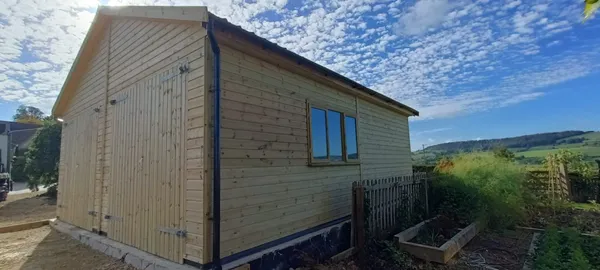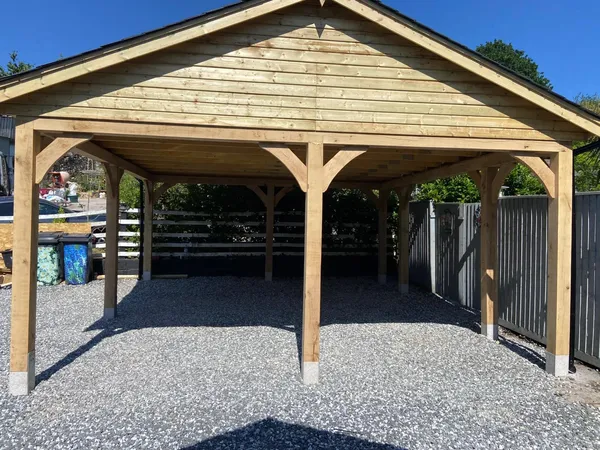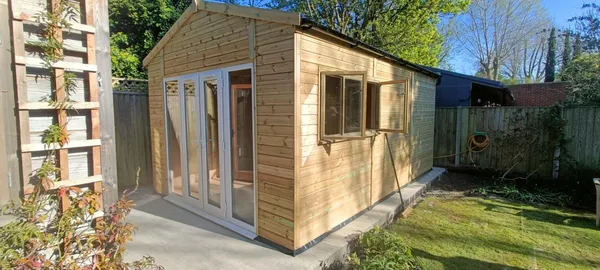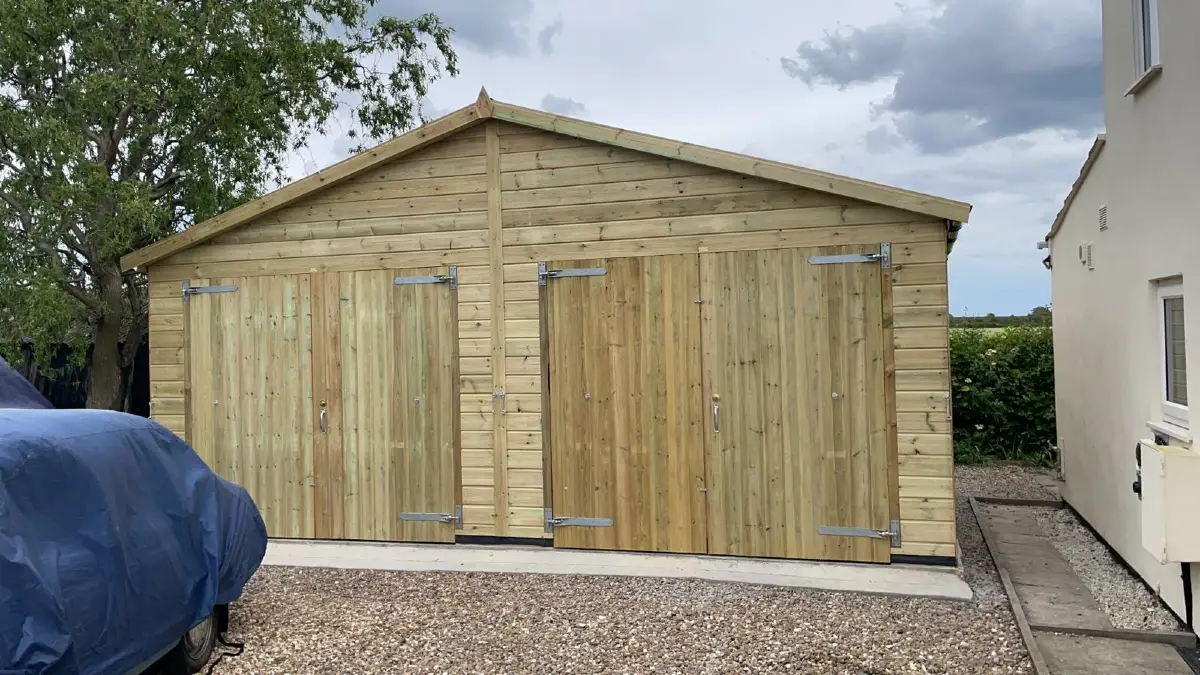
The best place is on level, well-drained ground with easy access from the driveway and enough room to manoeuvre your vehicle. The garage should also fit comfortably within the property and leave space for installation and maintenance.
However, every plot is different. Ground conditions, boundaries, nearby trees, underground services and planning restrictions can affect the final position.
Below, we explain what to check before choosing where to build your garage.
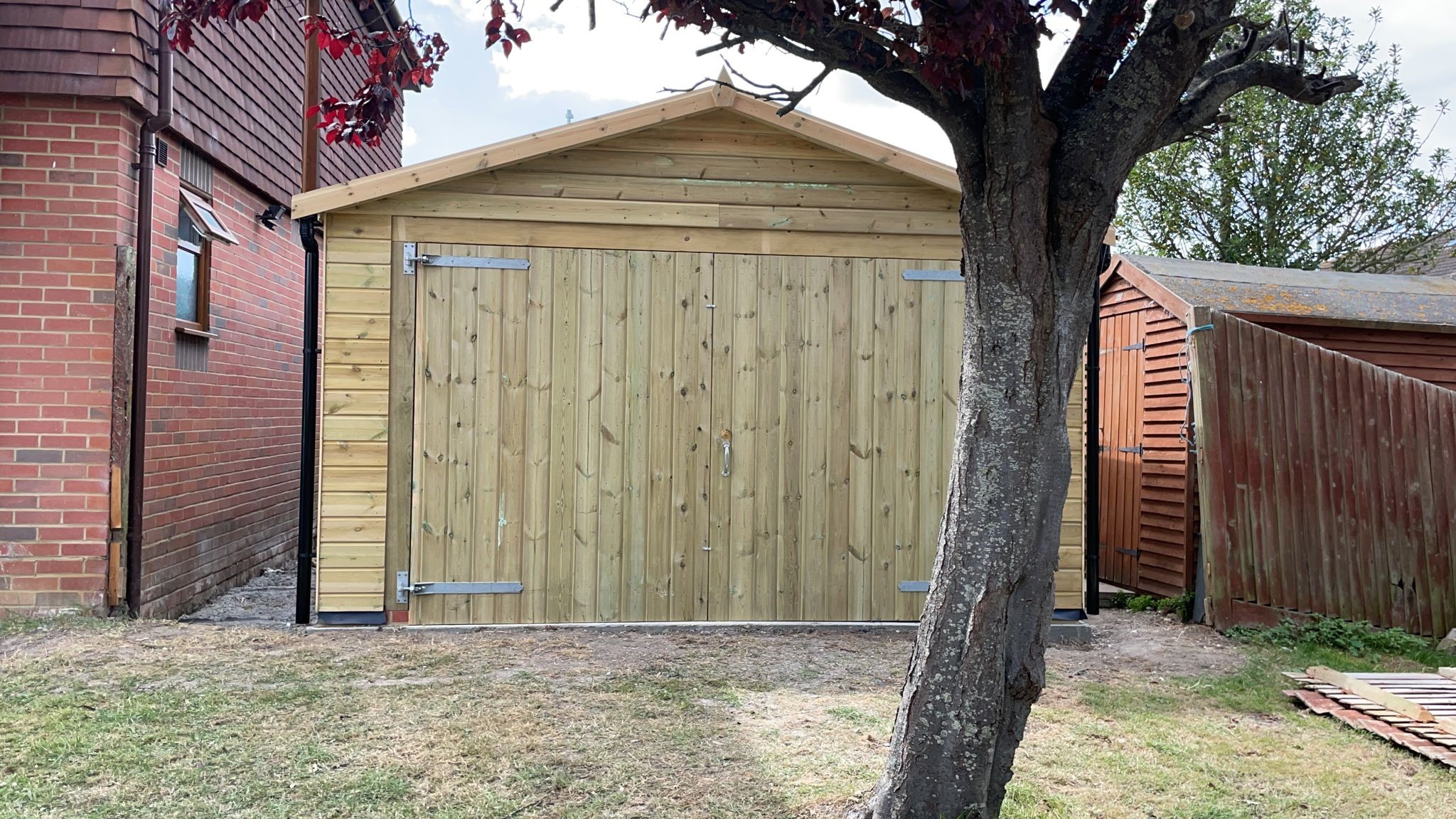
Check the ground before deciding where to place your garage.
Where possible, choose firm, stable ground that can support a solid base. Clay soil can shrink and swell, especially near trees, so your contractor may need to adapt the groundwork or foundations.
Choose a level, well-drained site where rainwater will not collect around the building. If your garden slopes, ask a groundwork contractor how to prepare the base and manage the drainage.
Make sure cars can drive to the garage easily without sharp turns or awkward manoeuvres. It is also helpful to leave enough space in front of the garage for vehicles to turn or reverse safely.
Check that the driveway is not too steep and leave enough room to open the vehicle and garage doors comfortably.
Leaving space around the garage, especially if it is built from timber, can be useful for maintenance. This allows access to the walls, roof overhangs and gutters, making it easier to inspect and maintain the building over time. Keep the garage and all its roof and drainage parts within your property.
Make sure Chart’s delivery vehicle and installation team can reach the site safely. Check the width of gates and driveways and look for tight turns, low branches, overhead cables or other obstacles.
The team will also need enough space around the base to unload materials and build the garage. If access is difficult, speak to Chart Garages before placing your order.
The garage’s orientation can influence how practical the building is to use. If possible, place the garage so the door faces the driveway.
Doors that face strong winds may let rain, leaves, and debris blow into the garage when opened. If you can, position the doors away from prevailing winds or use nearby fences, hedges, outbuildings, or walls to provide some shelter.
Many people prefer the garage to sit close to the house so it is easier to move between the two buildings, especially when carrying shopping, luggage or tools. It can also make the space feel more connected to the rest of the property.
The best distance depends on the property’s layout and how you will use the garage. If you can, place it close enough for convenient access while still fitting comfortably within the available space.
Also consider how electricity, EV-charging cables and drainage will reach the garage. Longer routes may require more groundwork and increase the installation cost. Building Regulations may also affect the required distance in some cases.
The garage can sometimes sit close to a boundary, but the exact position will depend on its height, design and the rules that apply to your property. Confirm the boundary before finalising the garage position.
Keep the roof overhangs, fascia and gutters within your land, and make sure the downpipes direct water away without affecting the neighbouring property.
Read our guide to building a timber garage near a boundary for more information.
Check for trees, drains, pipes and cables before choosing the garage position. Tree roots can affect the groundwork, especially in clay soil, while excavation could damage buried services.
Ask your groundwork contractor to locate underground services before any digging begins.
Planning rules may affect where you can build a garage. In some areas, councils limit where outbuildings can be built to protect the street's appearance or to avoid blocking views from nearby homes.
Before choosing a position, check what applies with your Local Planning Authority. Read our guide to planning permission for garages, carports and carriage houses for an overview of the main rules in England.
Where you position a garage affects how it looks on your plot. A well-placed garage should feel like a natural part of the property’s layout rather than an afterthought.
In many cases, positioning the garage to the side of the house or slightly set back from the main building can help it sit more comfortably within the property.
It is also worth considering how the garage fits with the garden and the surrounding area. Placing it in line with the driveway or near existing outbuildings or fences can help everything look more organised.
For more design advice, read our guide to making a detached garage look like part of your property.
Choosing the right position is important, but the garage design should also complement your property.
Timber garages can work well in many settings. Their natural appearance and flexible design help them suit modern, traditional and period homes.
At Chart Garages, our timber garages, carports and carriage houses are made to order. You can choose from different sizes, layouts and design features to suit your space and property.
Contact our team today to discuss your plans and request a quote.
What are the common garage layout mistakes?
The biggest mistake is choosing a position based only on where the garage will fit. You also need to consider how easily you can drive in, whether water drains away, and whether there is enough space for installation and future maintenance.
Can you put a garage in front of your house?
Yes, but you will usually need planning permission in England. A garage in this position can provide easy road access, but it may also stand out more. Check the plans with your Local Planning Authority.
Can you build a garage in your garden?
In many cases, yes. The garage may qualify as permitted development if it meets all the rules covering its position, height, size and use. Read our guide to planning permission for garages and confirm the requirements with your Local Planning Authority.
How much space should you leave in front of a garage?
Leave enough room for your largest vehicle to approach, turn and reverse safely. You should also be able to open the garage and vehicle doors comfortably.
How far should a detached garage be from the house?
There is no ideal distance for every property. Balance convenient access with room for maintenance, drainage and any electricity or EV-charging cables.
Do you need a dropped kerb for a garage?
You may need one if vehicles must cross a pavement to reach the garage. Check the requirements with your local council or highway authority.