Choose a garage for enclosed vehicle storage, a carriage house for traditional open or enclosed bays, a carport for simple sheltered parking or a workshop for hobbies and practical projects.
The right option will depend on what you want to keep inside, how much security and weather protection you need and the space available on your property. Your preferred appearance, budget and plans for electricity or insulation may also affect your choice.
Below, we compare the four buildings to help you find the best fit for your property and plans.
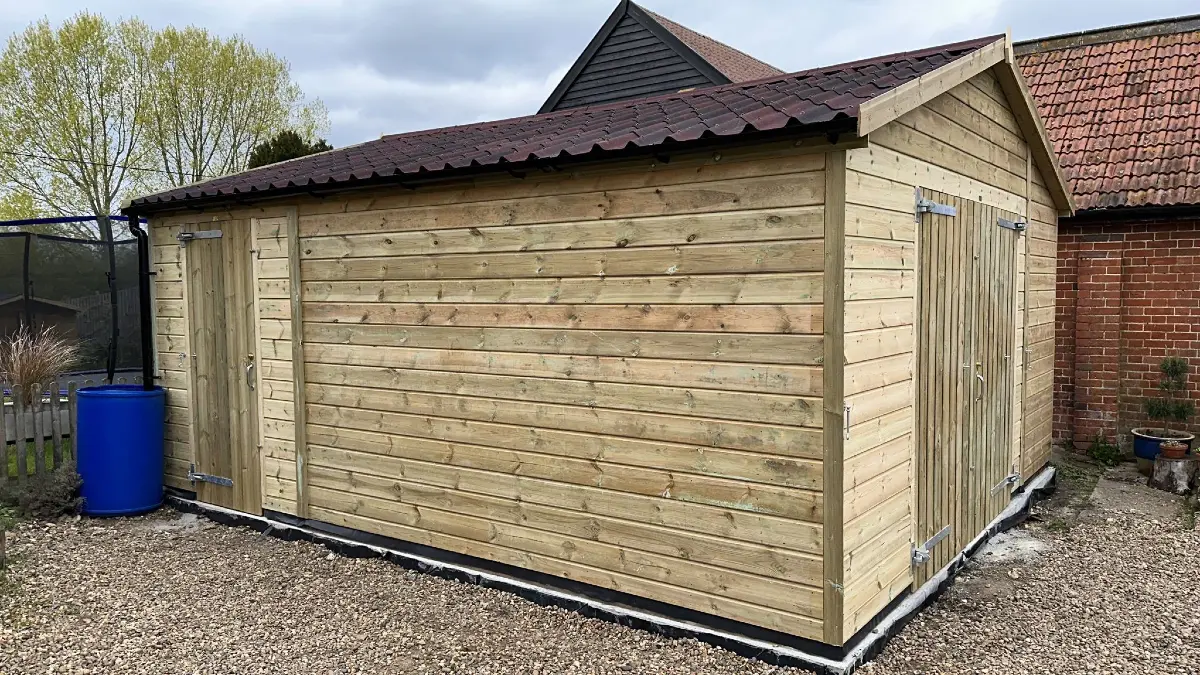
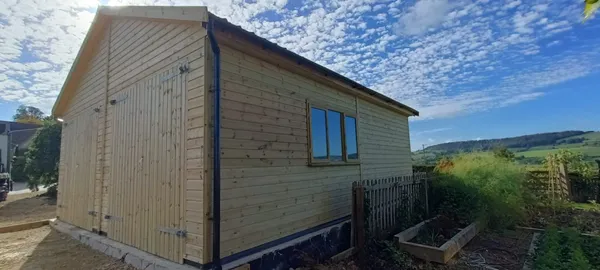
A wooden garage is built around secure vehicle storage. Every element, from the door width to the internal layout, supports that purpose.
Key characteristics of timber garages:
Enclosed detached garages are often attractive to future home buyers.
Best suited to:
You can also section off part of the building to create a separate room. With insulation and services, this space can work as a gym, hobby room, or workshop.
Planning and site considerations:
For more information about planning for detached garages, read this article.
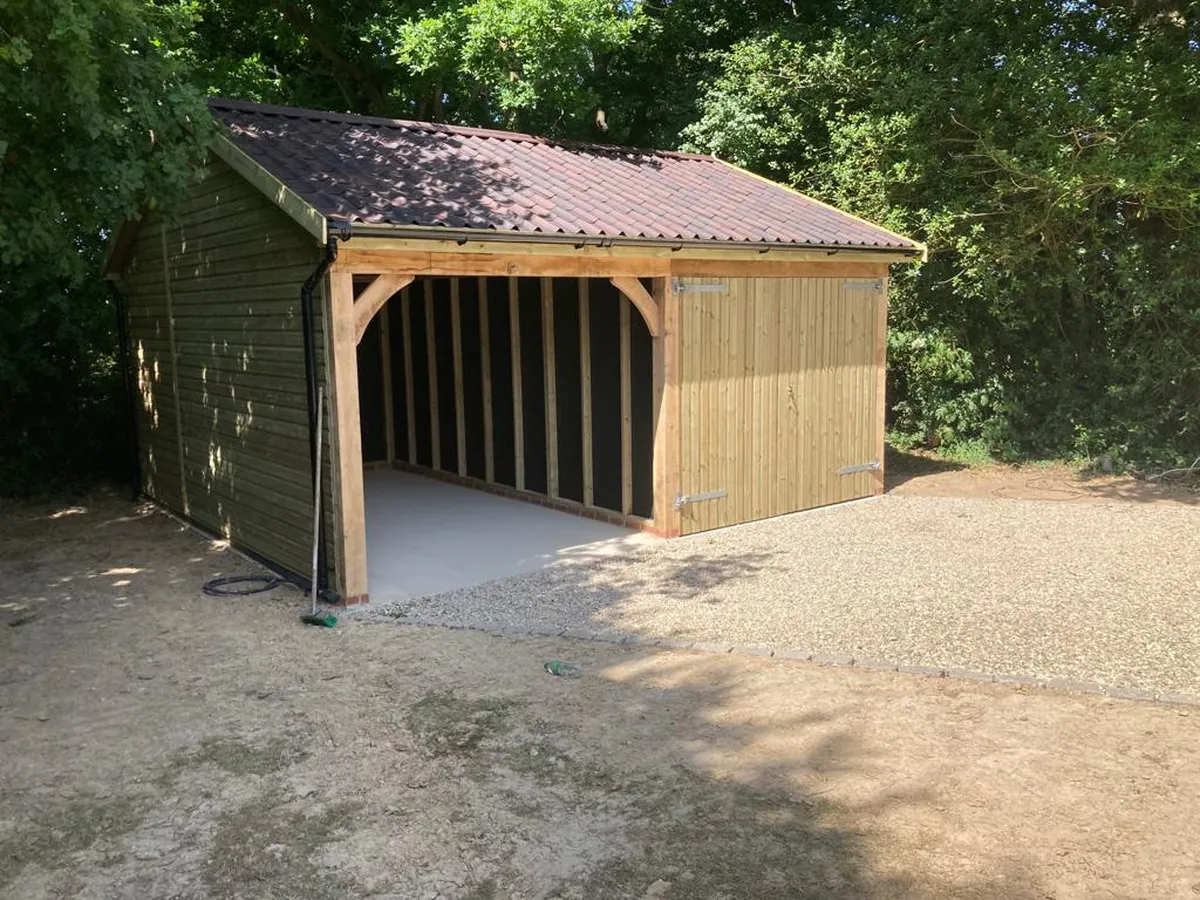
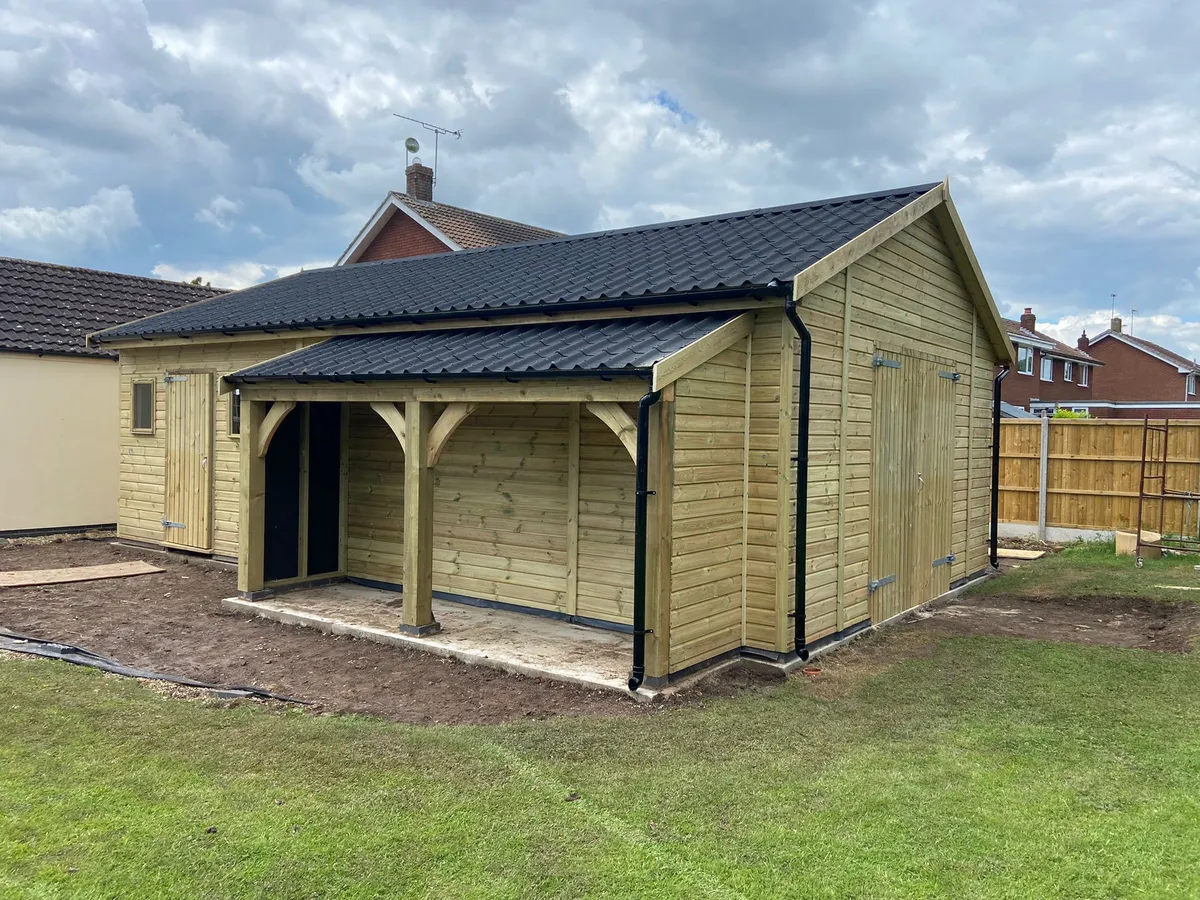
A carriage house, sometimes called a car barn or cart lodge, offers a more traditional garage style. Inspired by historic cart lodges and barns, it typically features open-fronted bays with enclosed sides and rear walls.
Key characteristics:
A well-designed carriage house can enhance the overall look of a traditional or rural home and potentially add value to your property.
Best suited to:
Each bay can remain open for sheltered parking or be enclosed with timber doors to create a secure garage, workshop, or storage area.
You can also add partitions, doors, lighting, EV charging, and windows, or extend the depth to create additional workspace behind the bays.
Planning and site considerations:
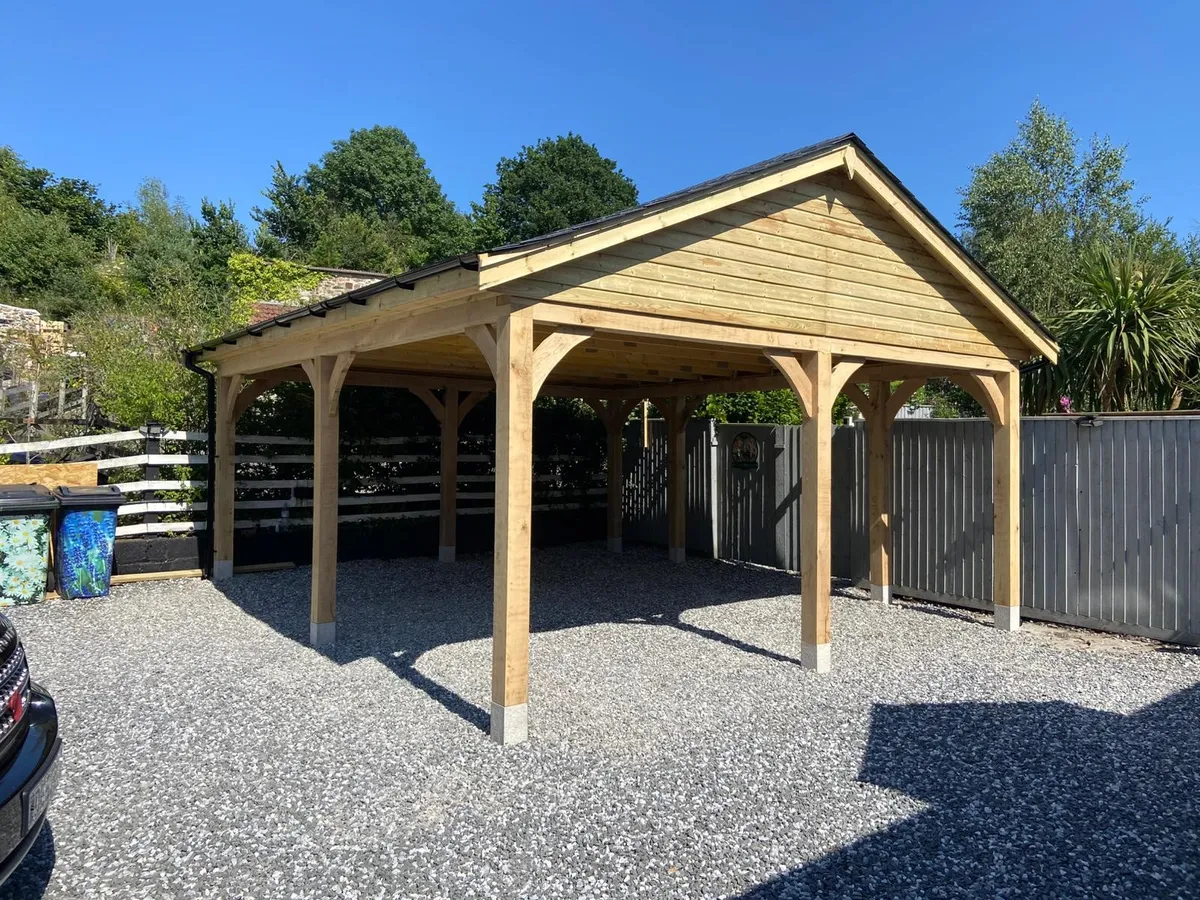
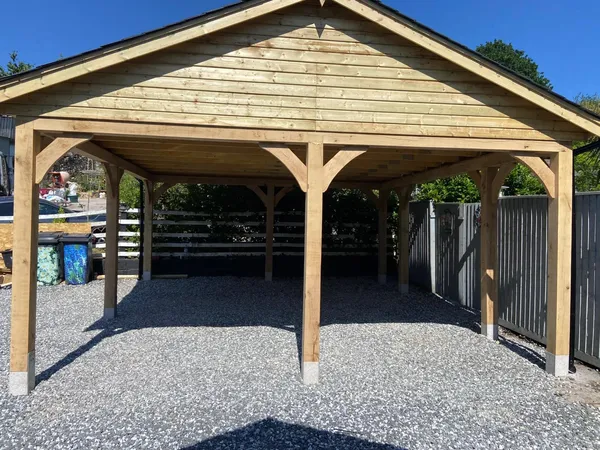
Timber carports often share a traditional style with carriage houses but remain open on the sides.
Key characteristics:
A carport can increase your property’s appeal by adding covered parking.
Best suited to:
Planning and site considerations:
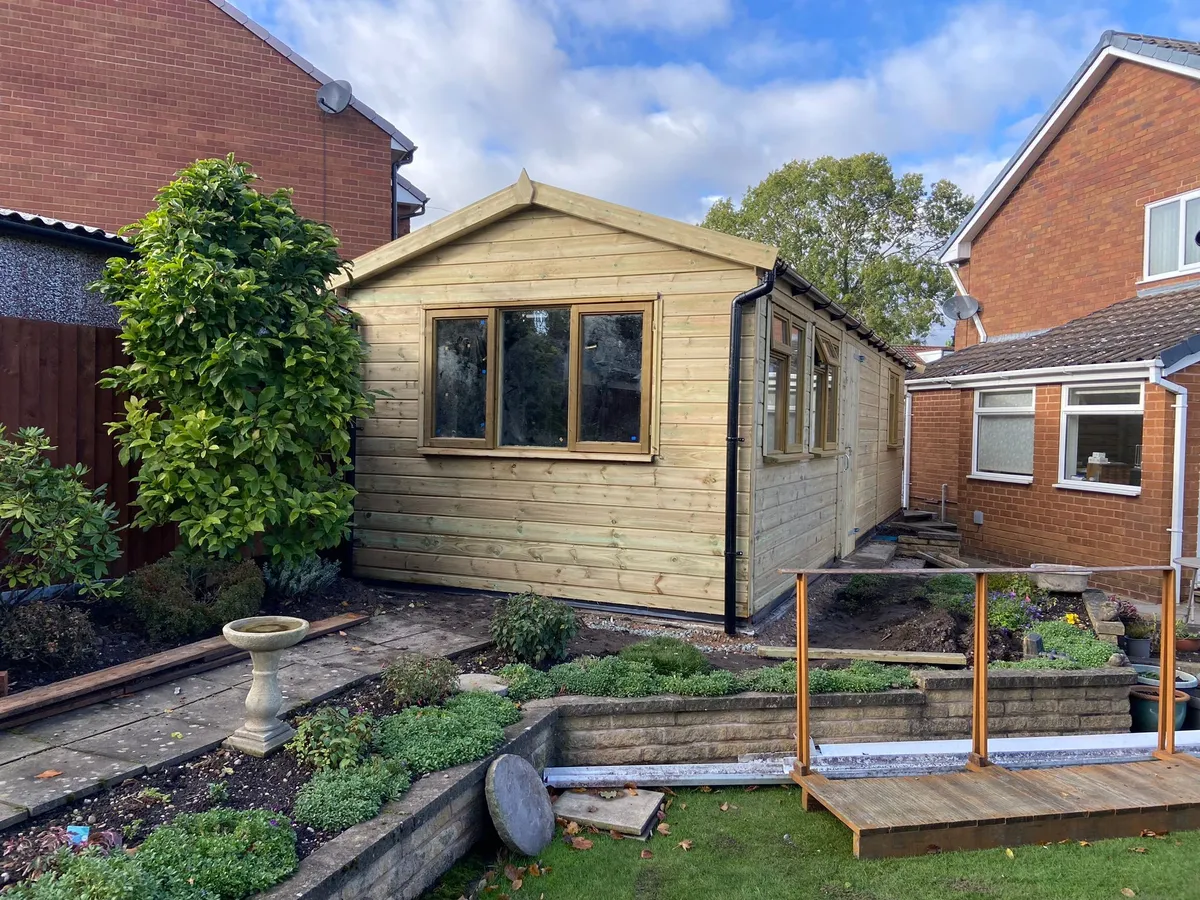
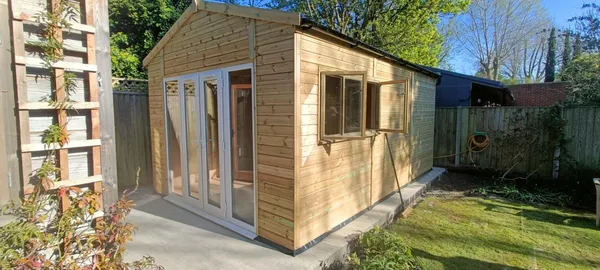
A garden workshop centres on how you use the space day-to-day.
Key characteristics:
A wooden workshop adds usable space to your home that many future buyers will value.
Best suited to:
You can configure door positions, windows, and partitions to suit the way you work. Add insulation and services to make the space comfortable year-round.
Planning and site considerations:
Make sure you include any utilities and services in the initial design. If you plan to use the workshop for trade or business, check whether planning, insurance, access or noise requirements apply.
Before finalising the layout, read about the common timber workshop mistakes to avoid.
Before deciding on a garage, carriage house, carport, or workshop, check what your site will realistically allow.
To qualify as permitted development in England:
Every site is different, and the intended use can change the rules, so it’s important to check what applies to your specific situation before starting the build.
Ground conditions and foundations:
It is worth checking ground conditions and getting professional advice on the appropriate base before finalising the design.
Our guide to wooden garage foundations explains the main stages of preparing a suitable base.
Utilities and services:
At Chart Garages, we build timber garages, carriage houses, carports, and workshops to suit a wide range of properties.
We design each structure to order, so you can choose layouts, bay numbers, roof styles, and detailing to ensure the building fits both your practical needs and your property.
Our team can guide you through design choices and base requirements where needed, helping you define the right solution from the outset.
If you are considering a new timber outbuilding, explore our ranges here on our website or contact us to discuss your project.
Can one timber building serve more than one purpose?
Yes. You can combine vehicle parking with storage, a workshop or hobby space by adding bays or internal partitions.
Can I combine open and enclosed bays?
Yes. A carriage house can include open bays for easy parking and enclosed bays for greater security or storage.
Do all timber buildings need the same foundations?
No. The right base will depend on the building’s size, weight, use and ground conditions. Follow the base plan supplied for your building.
Can electricity and insulation be added later?
Yes, although including them in the original design usually makes installation easier. A qualified electrician should plan and complete any electrical work.
Can I enclose an open bay in the future?
Possibly. Ask the manufacturer whether the structure can support the change and check whether planning permission or Building Regulations approval will apply.
Do timber garages and workshops need regular maintenance?
Yes. Keep the roof, gutters and drainage clear and inspect the timber regularly. Follow the manufacturer’s guidance for any exterior finishes or treatments.