The right timber garage will depend on your property, available space and how you plan to use the building. The character and location of your home can also influence which materials, roof shape and overall design work best.
Hampshire is a diverse county with rolling countryside, coastal areas, historic villages and busy towns. It includes parts of the South Downs and New Forest National Parks, as well as protected areas such as Chichester Harbour National Landscape. The county also contains the South West Hampshire Green Belt and numerous conservation areas. Additional planning restrictions may apply in these protected locations.
In urban areas such as Southampton, Portsmouth and Farnborough, some garages may qualify as permitted development, but this will depend on the property and proposed building.
Always check the requirements with your Local Planning Authority.
In this article, we discuss the planning restrictions in different areas of Hampshire and help you choose the right type of garage design for urban and countryside areas.
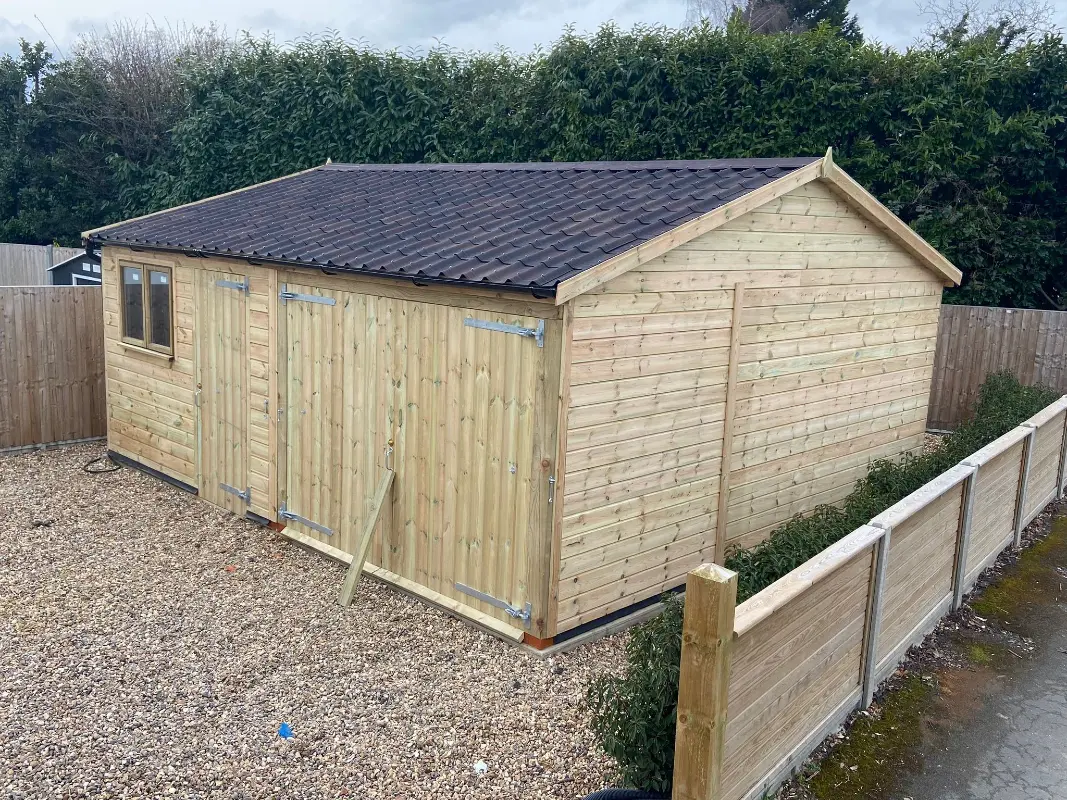
The planning requirements in Hampshire change depending on the location, property and proposed garage.
If you live by a modern urban centre, like Basingstoke or Andover, outside of a designated area, you might not need to apply for planning permission. Check if this applies to your property on the Hampshire Council website.
If building a garage by your home falls under permitted development rights, you can usually build a garage if it’s a detached, single-storey outbuilding that - together with other outbuildings and extensions - doesn’t take up more than 50% of the land around your original house. Other limits covering its height, position and use also apply.
If you live in a designated area - like the South Downs National Park - or a conservation area in a town like Winchester, you will likely need to apply for planning permission. You might also need to apply for listed building consent if your home is a Listed Building. In this case, your garage has to integrate well with the surrounding landscape. So your plan will be more likely to be accepted if it complements the area around your home.
Because the rules depend on height, placement, boundaries, and existing buildings, it’s always worth speaking to your Local Planning Authority to confirm what applies to your property.
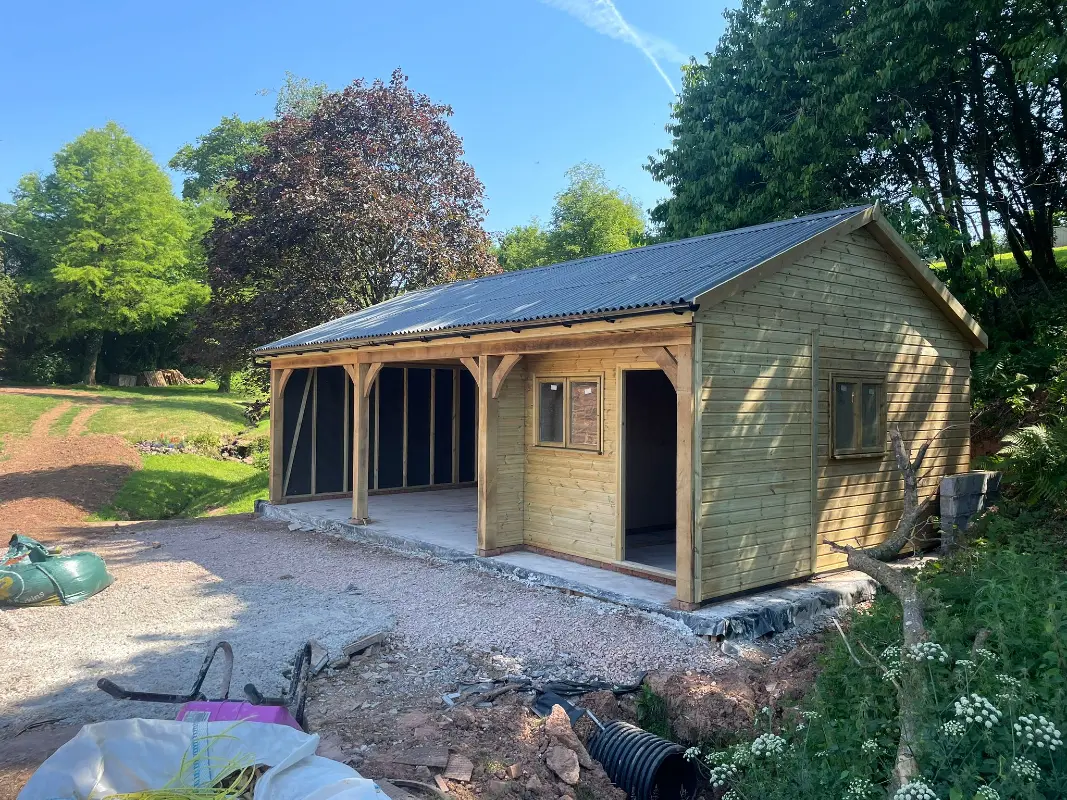
Here is our advice for designing a garage that fits well in a Hampshire context - whether you live in a conservation area or near a modern urban centre.
Although your options may be more limited in a designated area, a well-prepared planning application can give your proposal a better chance of success. Choose a traditional garage design that complements your home and the surrounding area.
Hampshire is known for its historic manor houses, red brick cottages, brick and flint farmhouses, Mediaeval buildings, Georgian townhouses, historic naval buildings, and rare thatched-roof houses.
The typical historic architecture of the region features:
These features vary in different areas. For example, timber-framed buildings are often found in conservation areas while thatched-roof houses are seen in rural villages. So, when choosing a design for your Hampshire garage, mirror the architecture around your home.
Timber buildings look timeless, no matter the setting. So wherever in Hampshire you are based, building your garage in timber will likely be a great solution. Moreover, wood is sustainable, robust and durable. Wooden outbuildings are also cheaper and faster to erect.
Moreover, when wood ages it turns silver; this will make your garage look timeless.
Opt for an oak-framed garage or a carriage house (also known as timber car barn or cart lodge) for the structure.
If you live in the countryside, in areas with extensive farmland, choose a detached oak-framed garage. You can mirror the traditional barns, cottages, and farmhouses typical of the Hampshire countryside by covering the wall with weatherboard cladding.
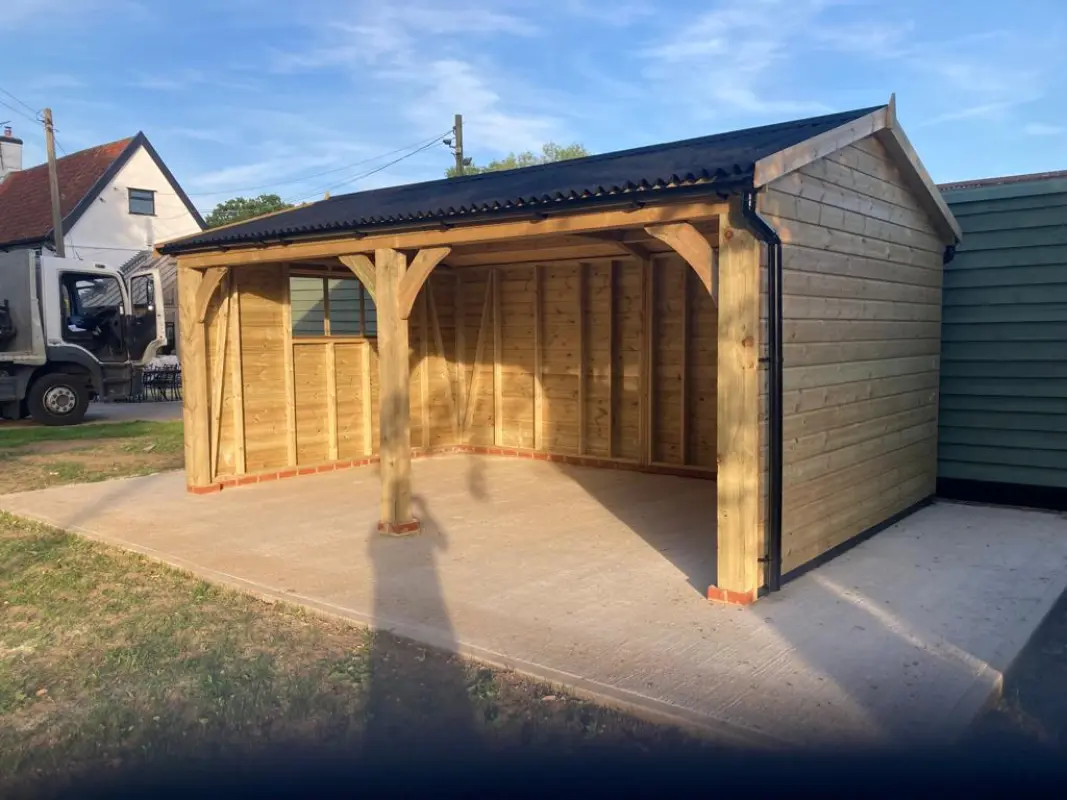
A carriage house, also called a car barn or barn-style garage, is a timber-framed garage with one or more open bays. If you wish, you can add an enclosed bay. This is the original garage, as it was designed in the 18th century. The open bay was used to store horse-drawn carriages and carts; the enclosed bay served as a room for the driver. A car barn fits well in conservation areas where historic architecture is prevalent, especially those featuring porticos. Opt for weatherboard cladding to add extra charm.
The garage roof should complement the structures around your home.
Do the buildings near your home feature steep-hipped roofs? Choose a steeper pitch angle (even going up to 25° can make a difference) and match the tile colour as closely as possible with shaded red, brown, or black Onduvilla, clay, and slate tiles.
Is your area characterised by moderately pitched roofs? Focus on mirroring the covering. Choose shaded red, brown or black Onduvilla tiles or clay and slate tiles.
If you live near a building with a thatched or catslide roof, opt for a carriage house, which features extended eaves (the parts of a roof that extend past the building's walls). You can complement the covering with natural-looking cedar shingles, shaded red or shaded brown Onduvilla tiles, or clay and slate tiles.
Add framed windows to your design to let some natural light into your garage and increase ventilation. UPVC windows match the sash windows often found in historic structures.
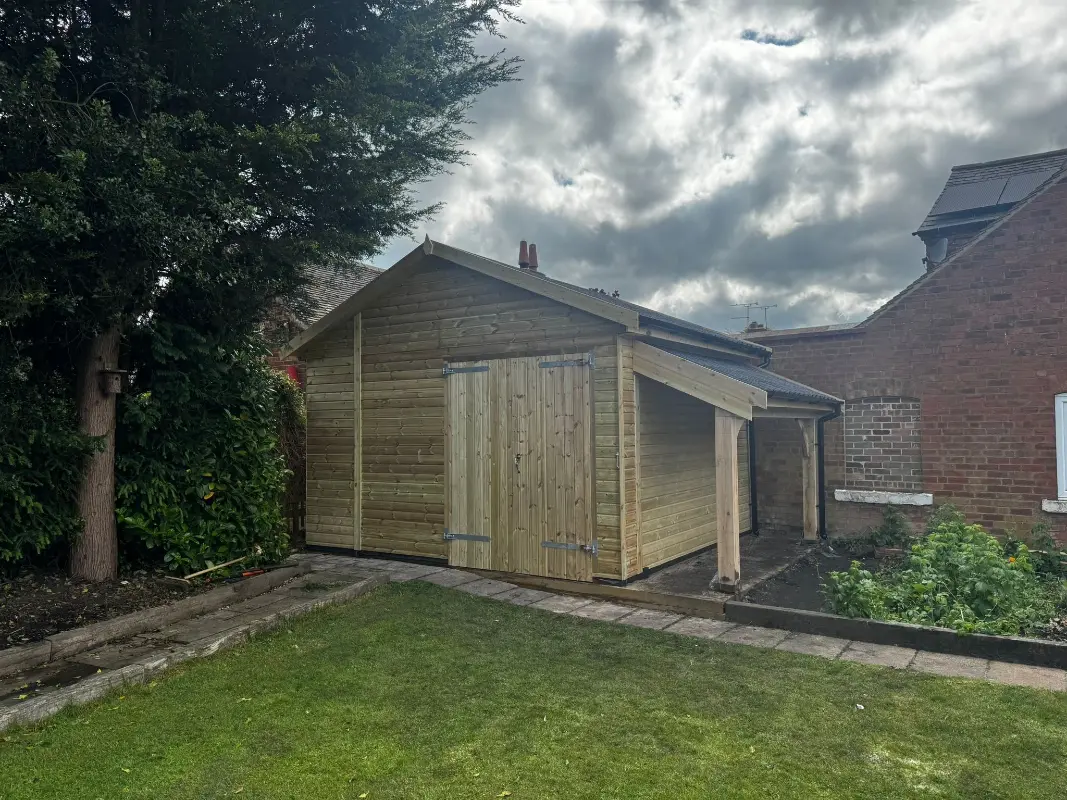
If you live outside a designated area, you might not need to apply for planning permission, but you should still choose a design that works with your property and available space.
A wooden garage fits any setting - modern, rural or historic. Choose to build in timber to save money and time and reduce your carbon footprint.
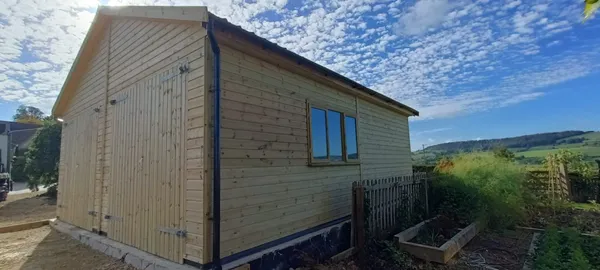
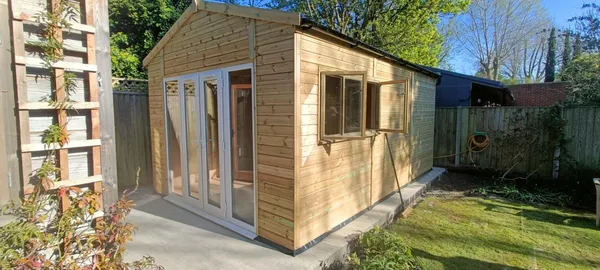
You can build a detached, enclosed wooden garage if your property size allows. This type of building comes with doors to keep your vehicle safe. And you can convert part of it into a storage or workshop. Choose shiplap cladding for a clean town look.
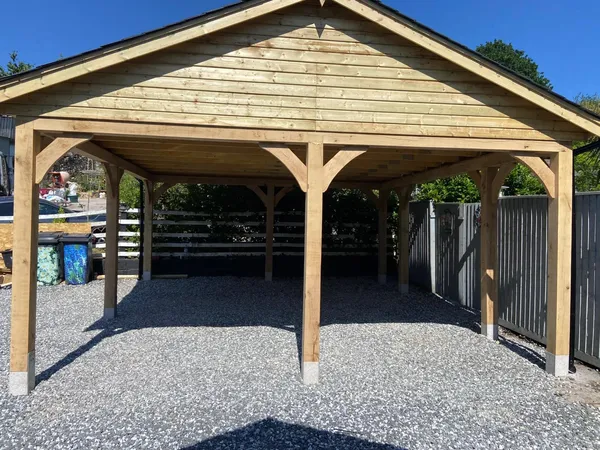
If you need to maximise space, opt for a wooden carport. This car storage solution has a smaller footprint and a minimalist design. However, it shelters vehicles from the elements efficiently. Timber carports with curved bracing can look as elegant as carriage houses.
Pick a matching pitch and covering material to help the outbuilding complement your home.
Popular roof covering options include:
Natural light and airflow are essential to keeping your timber building dry and moisture-free. Choose between single, double, and triple timber-framed or UPVC windows.
You can buy a made-to-order timber garage for your Hampshire property from Chart Garages. We design and manufacture traditional and contemporary timber garages, carriage houses and carports at our workshop in Kent.
Our enclosed wooden garages come in three ranges: the Clipper, Chart, and Chester. Our carriage houses are available in the Chart and Chester ranges. Our carports come in the Chester range as standard.
If you need a high-pitched roof to complement a historic home, the Chester range can support a steeper-pitched roof (up to 35°). The other ranges have either a 17° or 22.5° roof pitch.
Our timber garages are built to order, so you can customise them to suit any size, shape, and configuration. Choose the number of enclosed and open bays and add windows, internal partitions, personal doors, insulation, or an external log store. Our buildings can be built to receive electric roller shutter doors, too.
If you own an electric vehicle, we can add a dedicated space for the charging point to your design.
For the roof covering, choose between:
Our UPVC-framed windows mirror the look of historic windows. Our streamlined timber windows, which complement a contemporary home, are available with single- or double-glazing.
Finally, we offer shiplap and weatherboard cladding.
Which materials work well with older Hampshire homes?
Weatherboard cladding, timber windows and traditional-looking roof coverings can help a garage complement a period property.
Do I need planning permission for a timber garage in Hampshire?
Not always. Requirements depend on the property and proposed building, so check with your
Local Planning Authority. Read our planning guide for a general overview.
Can I customise my timber garage?
Yes. You can choose the size, number of bays, doors, windows, cladding, roof design and internal layout.
Can a timber garage include a workshop or storage area?
Yes. The interior can be divided into separate areas for parking, storage or workshop use.
Where are Chart timber garages made?
Chart timber garages are made to order at our workshop in Kent for customers across Hampshire and other parts of the UK.