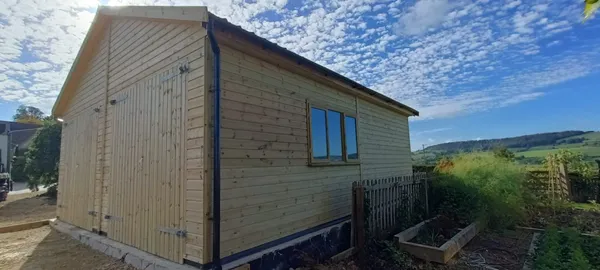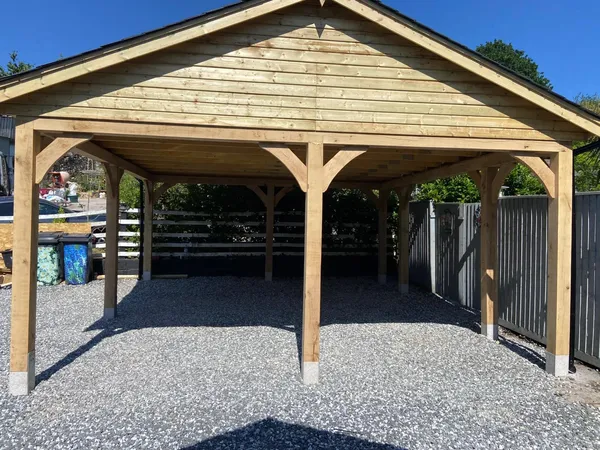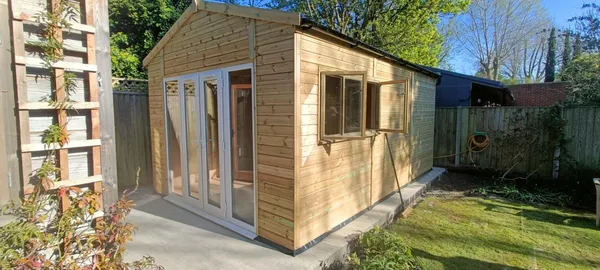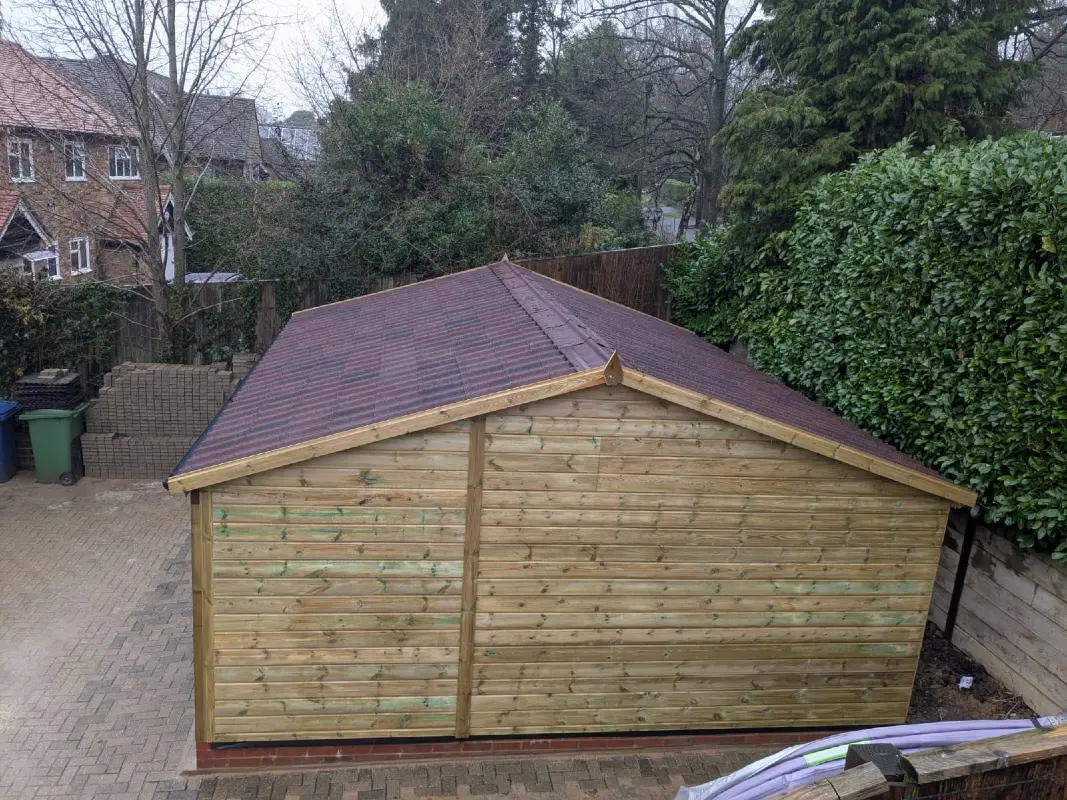
In England, you can sometimes build a timber garage up to a boundary under permitted development. However, its height and design must meet certain rules.
*Height is measured from the highest ground immediately beside the garage to the highest part of the building.
Every site is different, so it is important to check what applies to your specific property before starting construction.
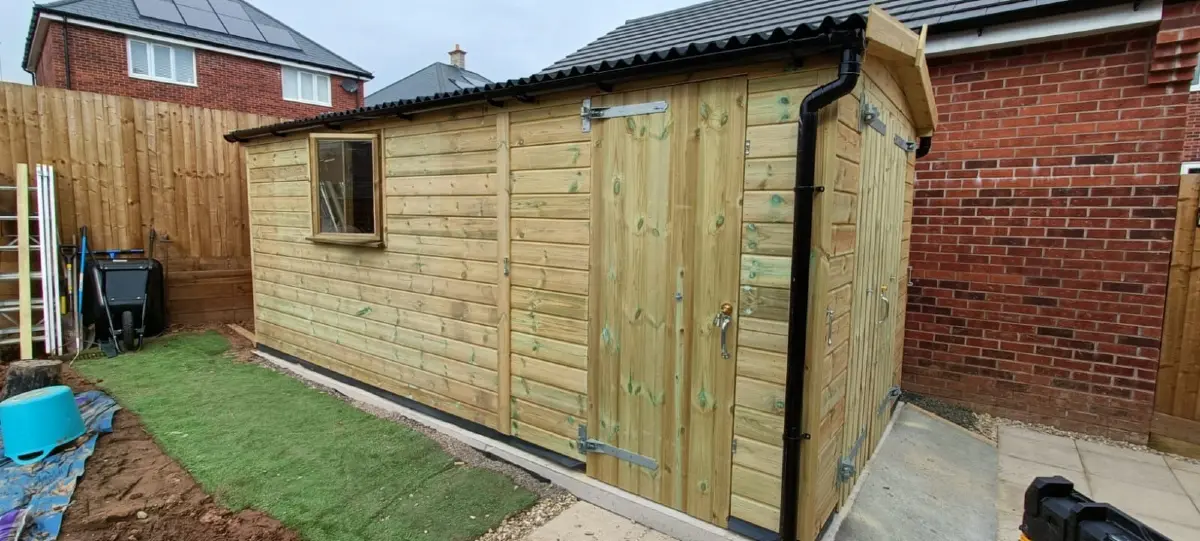
The boundary height limit is only one of the rules. Rules also cover where you can place the garage and how you can use it.
Extensions and outbuildings together must not cover more than 50% of the land around the original house.
Bear in mind that permitted development rights can restricted or removed, for example through an Article 4 direction. Read our planning guide for a general overview.
Confirm what applies to your property with your Local Planning Authority before starting work.
Before finalising the design, confirm the legal boundary and think carefully about the roof overhang, drainage, foundations, and possible effects on neighbouring buildings.
Title plans usually show only the boundary’s general position, so do not use them to take precise measurements. If the boundary is uncertain, ask a chartered land surveyor or solicitor for advice.
Below, we explain each of these points in more detail.
No part of the structure, including roof overhangs, fascias, or gutters, should sit beyond your legal boundary. Even a minor breach can start a civil dispute.
Gutters and downpipes must not discharge onto neighbouring land. Runoff can cause damp or damage and may lead to a dispute.
When building close to a neighbour, it helps to:
Building Regulations can apply even when a timber garage qualifies as permitted development.
According to the Planning Portal guidance for outbuildings, a detached building will not normally require Building Regulations approval if:
Because timber is combustible, placing a garage of between 15m² and 30m² at least one metre from the boundary is usually the simplest way to meet this exemption. Ask your local building control team to confirm whether it applies to your project.
Bear in mind that even if the garage is exempt, electrical work and other installations may still need to meet Building Regulations.
The soil, garage and nearby buildings will affect the foundations you need. For example, clay soil can move as it becomes wetter or drier, while trees and poor drainage can affect the foundation design.
The Party Wall etc. Act 1996 may apply if you dig near a neighbouring building or carry out work on the boundary. If you are unsure, ask a party-wall surveyor if you need to serve formal notice before starting.
Ask a structural engineer or experienced groundwork contractor to assess the site during the design stage. This can prevent movement, damage and costly changes later.
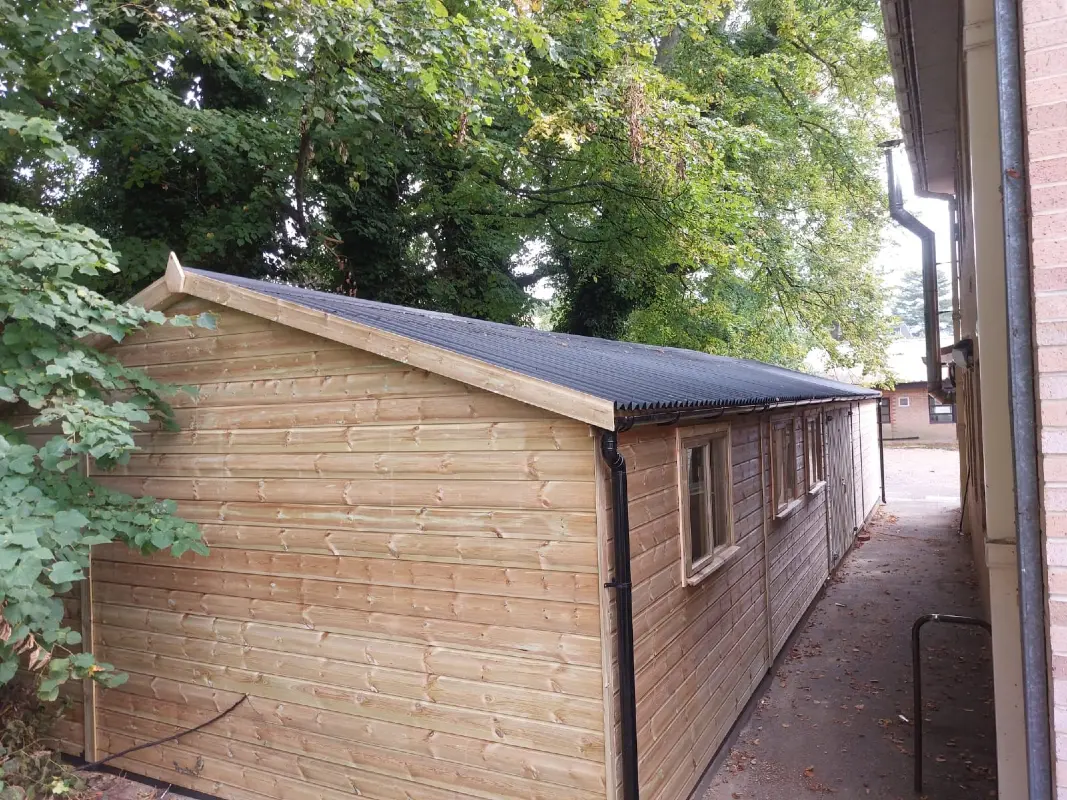
If your timber garage exceeds permitted development limits or if the rights have been removed, you will need to apply for planning permission.
On top of the factors we discussed earlier, local authorities typically consider:
If planning permission is required and the property is in a conservation area, National Park or National Landscape, the council will also consider how the garage affects the character of the area. The same applies if it will stand within the grounds of a listed building.
This can influence:
Contacting the planning authority early or looking for professional design advice can reduce the risk of objections or delays.
A garage can reduce daylight or change the view from a neighbouring property.
To reduce risk of objections:
A smaller, well-proportioned garage is often easier for neighbours to accept.
How you use the garage can affect your neighbours.
To minimise potential issues:
Many disputes happen during construction because of noise, mess, access or damage.
To reduce friction:
Crafted from sustainably sourced timber and precision-manufactured in the Chart workshop, our wooden garages are built for long-term durability and dependable performance.
Our designs can be adjusted to include side doors, additional windows, or multiple bays, depending on the site and intended use. Our roofing options include Tapco slate, Onduline, and Onduvilla tiles, as well as cedar shingles, allowing the garage to sit comfortably within its surroundings.
Remember that local conditions, boundaries, and planning constraints can vary across England, so it’s important to verify the details for your site before you build.
Does the one-metre boundary rule relate to planning permission?
No. The one-metre rule is about Building Regulations, not planning permission. It may apply to detached garages between 15m² and 30m².
Can the garage roof or gutter cross the boundary?
No. Keep the walls, roof overhangs, fascias and gutters within your property and direct rainwater onto your own land.
Does the Party Wall Act apply to a detached garage?
It may apply if you build on the boundary or excavate near a neighbouring structure. Ask a party-wall surveyor whether formal notice is required.
Do I need my neighbour’s permission?
Not usually, as long as all the work stays within your property. However, Party Wall rules may still apply.
How can I confirm the exact boundary position?
Check the title documents, but remember that title plans usually show only general boundaries. Ask a chartered land surveyor or solicitor for advice if the position remains unclear.