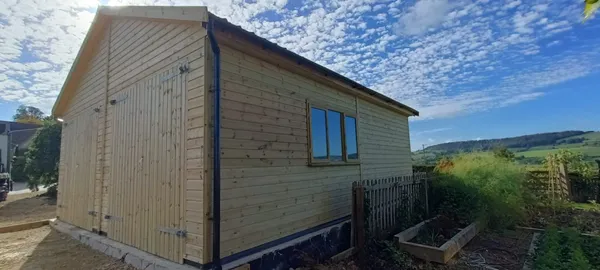
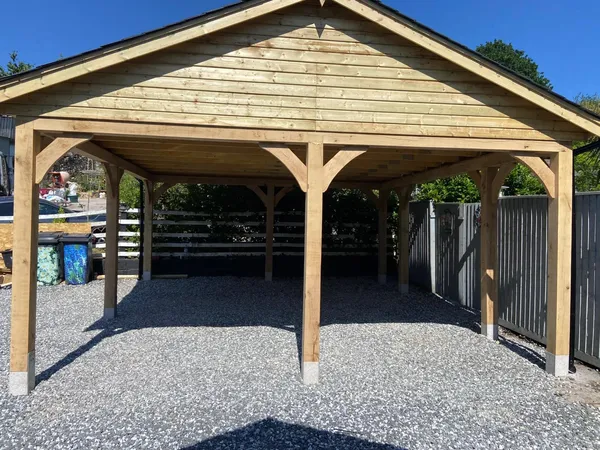
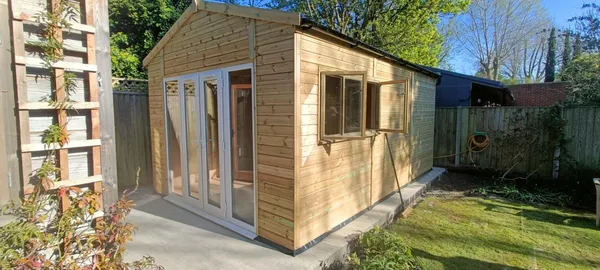
Pressure treatment helps timber resist fungal decay and wood-destroying insects. The process uses a vacuum and controlled pressure to push wood preservative deep into the timber.
Builders often choose pressure-treated softwood for garages, workshops and other outdoor buildings. These structures face rain, damp air and changing temperatures throughout the year, so the timber needs suitable protection.
Moisture creates the right conditions for fungi to grow. Some insects can also damage timber by feeding on it or creating tunnels inside it. Over time, this damage can weaken the wood.
Pressure treatment adds preservative below the timber’s surface. This gives suitable timber components extra protection when builders use them outdoors or in areas where they may face moisture.
The treatment does not make the wood waterproof, though. The building still needs good drainage and ventilation to keep the timber dry.
The supplier first removes the bark and cuts or shapes the timber as required. They may also add grooves, profiles or other details at this stage. Completing as much of this work as possible before treatment helps the preservative protect the finished surfaces and reduces cutting later.
The timber must contain the right amount of moisture before treatment. Too much moisture can stop the wood from absorbing enough preservative. The supplier dries the timber under controlled conditions until it reaches a suitable level.
They then stack the pieces with small gaps between them. These gaps allow the preservative to move around the timber during treatment.
The exact preparation process will vary according to the timber species, dimensions and intended use.

The supplier loads the prepared timber into a large, sealed treatment vessel.
The process then follows several stages:
The supplier uses computer-controlled equipment to adjust the pressure, timing and amount of preservative to suit the timber and the protection it needs.
A timber Use Class describes the conditions the wood will face. Timber inside a dry building needs a different level of protection from timber used outdoors or close to the ground.
The main factors include contact with moisture, exposure to the weather and contact with the soil. The supplier uses this information to choose a suitable preservative and treatment level.
The supplier allows the timber to dry after removing it from the treatment vessel. Drying helps the timber settle before transport and construction.
The supplier may also label each batch to record its treatment. This gives the manufacturer useful information about the timber’s specification and intended use.
Freshly treated timber may initially feel damp or show a green tint. Its appearance will gradually change as it dries. The final colour will depend on the wood and preservative.
Pressure treatment may not reach the centre of every piece of timber. Cutting, drilling or shaping the wood after treatment can expose less-protected areas.
The manufacturer may need to apply a suitable end-grain preservative to fresh cuts.
Yes. Pressure treatment helps protect the wood, and regular care helps the whole building perform well.
Keep gutters and drains clear, remove soil and leaves from around the walls and check the timber for signs of damage. Good ventilation will also help moisture escape from the building.
Exterior finishes can change the timber’s colour and provide extra surface protection. Follow the manufacturer’s instructions when choosing and applying a finish.
Read our guide to low-maintenance timber garages for more advice.
Chart Garages uses pressure-treated timber for specified structural and external parts of its timber buildings. The exact specification varies between our ranges and building components.
We choose thick framing and durable external cladding to create strong buildings for long-term use. Good roof design, ventilation, guttering and drainage also help protect the timber.
Learn more about choosing timber for a wooden garage, or explore our range of made-to-order timber garages.
Is pressure-treated timber waterproof?
No. The treatment helps protect timber from decay and insects, but it does not make the wood waterproof.
Can you paint or stain pressure-treated timber?
Yes, once it has dried properly. Use a product suitable for treated outdoor timber and follow the application instructions.
Why does pressure-treated timber sometimes look green?
Some preservatives leave a temporary green tint. The colour usually softens as the timber dries and ages.
Can you cut pressure-treated timber?
Yes, but cutting may expose less-protected wood. Apply a suitable end-grain preservative to fresh cuts as recommended by the timber supplier.