Yes, it can be. Oak’s natural appearance and traditional character can complement historic homes and areas.
A conservation area is a place with special architectural or historic interest. Councils aim to protect its character, so they will look carefully at the garage’s location, size, design and materials.
Bear in mind that every conservation area is different, so check the local rules with your Local Planning Authority before making plans or starting work.
There are several reasons why oak can feel right at home in a historic setting. We explore them below.
Oak has been used in British buildings for centuries, so it is a natural choice for period homes, rural properties and traditional settings.
Oak has a warm colour, visible grain and natural texture. These features can help a new garage feel at home beside an older property.
Oak gradually changes colour when exposed to sunlight and rain. Its original golden tones soften before weathering to a natural silver-grey.
The exact colour and speed of this change will depend on the timber’s exposure and whether it has been treated.
This weathered finish can help the garage look more settled in its surroundings.

Oak pairs well with brick, stone, clay tiles, slate and timber doors. This makes it easier to match materials found on the main house or nearby buildings, helping the garage sit comfortably within its surroundings.
There is no single combination that will suit every property. Take a look at your home and other buildings nearby to see which materials, colours and finishes are commonly used. For example, matching the local brickwork or using a similar roof covering can help the garage feel like a natural part of the area.
Not always. Some garages in conservation areas may qualify as permitted development, but extra restrictions apply. Local planning conditions or an Article 4 direction may also limit what you can build without permission.
Before choosing a design or starting work, check with your Local Planning Authority.
For an overview of the rules, read our guide to planning permission for garages, carports and carriage houses.
Yes. Design rules can be stricter in conservation areas because new buildings should preserve or enhance the character of the area.
The council may consider the garage’s size, position, roof shape, materials and visibility from the road.
Requirements vary by location, so check your council’s conservation area appraisal or design guide.

Start by reading your council’s conservation area appraisal or design guide. This will help you understand which features and materials are important locally.
You should also consider:
At Chart Garages, we design and build oak-framed garages to suit different properties, plots and uses.
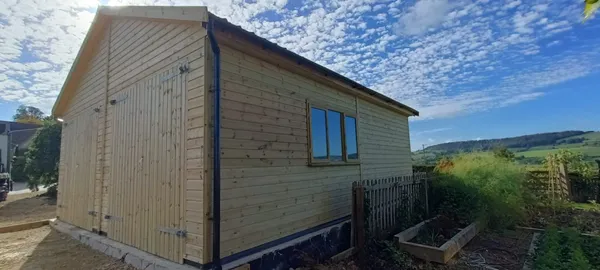
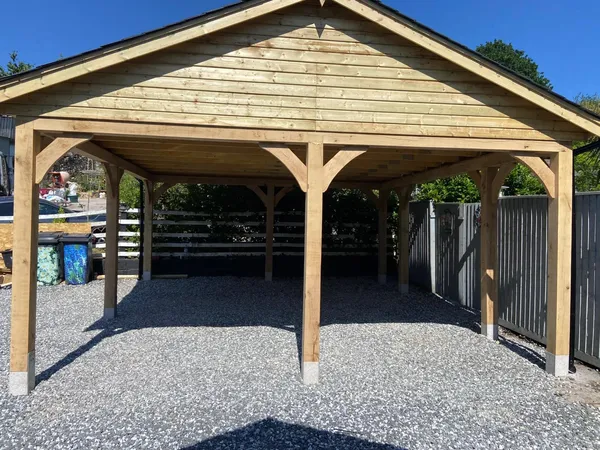
Chart oak-framed garages have exposed oak posts, header beams and curved bracing at the front, combined with pressure-treated timber in the covered areas. Each garage has a traditional barn-style appearance and can be tailored with different sizes, layouts, doors, cladding and roof coverings.
Our team can help you choose the size, layout, roof covering and finishes that complement your home and its surroundings.
We can also provide base plans and elevation drawings if you need them for a planning application.
Are oak-framed garages suitable for conservation areas?
Yes, they can be. Oak’s natural appearance and traditional character can complement period homes and historic surroundings. The design must still suit the character of the individual conservation area.
Do I need planning permission for a garage in a conservation area?
Not always. Some garages may qualify as permitted development, but extra restrictions can apply. Check with your Local Planning Authority before starting work.
Does using oak make planning approval more likely?
Not necessarily. Oak may suit a historic setting, but the council will also consider the garage’s size, position, roof shape, materials and effect on the surrounding area.
Does every conservation area have the same rules?
No. Each conservation area has its own character and may have different local guidance. Check your council’s conservation area appraisal and whether an Article 4 direction applies.
Can I build an oak-framed garage next to a listed home?
You may be able to, but you’ll need planning permission if the garage will be within the grounds of a listed building. Listed Building Consent may also be required if the work affects the listed building itself.
What colour does oak become as it ages?
External oak usually changes from golden brown to silver-grey as it is exposed to sunlight and rain. The speed and final appearance depend on its position, exposure and any treatment used.
Do I need Building Regulations approval?
You may need approval depending on the garage’s size, location, construction and use. Building Regulations are separate from planning permission, so check with your local building control team.